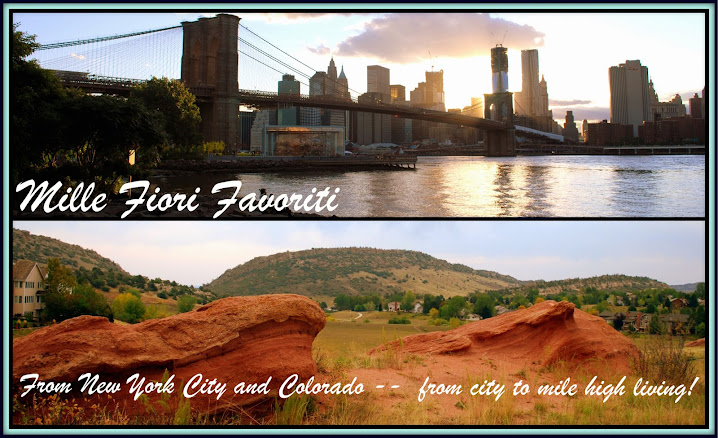

A view of Manhattan from Brooklyn Heights
Please note: all photos enlarge when clicked on.
In the days preceding the Battle of Brooklyn, General George Washington was shifting the Continental Army troops from what is now the borough of Manhattan to the Brooklyn Heights area of Brooklyn. He kept many of the best units in Manhattan, as he expected the British to sail down the Hudson River and attack there. Washington was also misinformed about the size of the British and Hessian troops that came ashore in Brooklyn, believing the number to be much less than it was. Little did he know that the British had over 20,000 troops moving steadily towards Brooklyn Heights, flanking his troops from both the east and west and the south sections of Brooklyn, which would effectively corner the Continental Army and force a surrender.
In the days preceding the Battle of Brooklyn, General George Washington was shifting the Continental Army troops from what is now the borough of Manhattan to the Brooklyn Heights area of Brooklyn. He kept many of the best units in Manhattan, as he expected the British to sail down the Hudson River and attack there. Washington was also misinformed about the size of the British and Hessian troops that came ashore in Brooklyn, believing the number to be much less than it was. Little did he know that the British had over 20,000 troops moving steadily towards Brooklyn Heights, flanking his troops from both the east and west and the south sections of Brooklyn, which would effectively corner the Continental Army and force a surrender.

An actual Revolutionary War cannon at The Lefferts House Museum

While the southern end of Brooklyn was bucolic farms in 1776, the middle section was covered in large areas by dense woods, similar to the above photo taken in Prospect Park in Brooklyn. The Continental soldiers cut down many trees to block the roads so that the enemies cannon would not be able to pass through easily, and branches from the trees were meshed together and used as fortifications in the trenches.
 The Dongan Oak Monument-click on to enlarge
At an area called Battle Pass, the Americans had chopped down a well known large oak tree called The Dongan Oak Tree to block the Flatbush Road where it went through the pass, to try to impede the advance of the British Army. The monument above recalls that feat.

A view of the area around Battle Pass in Prospect Park, which probably still appears very much like it did 233 years ago.
 A commemorative marker at Battle Pass, Prospect Park-click on to enlarge
As British and Hessian soldiers approached from the south, the Americans fought in vain to hold them back at Battle Pass. Outnumbered, many Americans found themselves surrounded in the woods by rings of Hessian troops who closed in for the kill with bayonets. Some Americans were able to fight their way past the British and the fleeing patriots headed back toward the American lines on Brooklyn Heights or joined the Maryland 400 at the Old Stone House.

Another commemorative marker describing the battle at Battle Pass, Prospect Park--click on to enlarge

A Heritage Trail placard describing the battle at Battle Hill in Brooklyn, New York's Green-Wood Cemetery--click on to enlarge

A view from Battle Hill of Brooklyn, and the Manhattan skyline in the distance
American riflemen had taken up a position on Battle Hill, in what is now Brooklyn's Green-Wood Cemetery, and from the highest point in that area, they used their rifles to good advantage against the British officers.
 Battle Hill's Minerva and The Altar Of Liberty Monument in Green-Wood Cemetery
The Minerva Monument has stood atop Battle Hill, arm raised, saluting the Statue of Liberty across the harbor for 85 years. The gift of the Irish-American businessman, Charles M. Higgins, the monument was dedicated on August 27, 1920.
A plaque at the base of the monument reads as follows:
“The Place Whereon Thou Standest is Holy Ground”
Glory to the Memory of Our First National Heroes Who Fought and Fell on this Battle Ground to Win Our Liberty and Independence! Minerva, the Goddess of Wisdom, Glory, and Patriotism, Here Salutes The Goddess of Liberty and Enwreathes This Altar in Tribute to the Heroes of American Liberty and to the Wisdom of American Institutions." 
Another dedication on the Altar To Liberty monument in Green-Wood Cemetery--click in to enlarge
The British lost over 60 officers and men in the attacks at Battle Pass and Battle Hill, as the Americans valiantly kept the invaders at bay for most of the morning until they were finally overwhelmed.
 The Old Stone House in J.J. Byrne Park, Brooklyn, NY
The Maryland division of the Continental Army, under command by General William Alexander, waged a crucial battle at the Vechte house, now known as the Old Stone House. (The old Dutch house that stands today has been reconstructed from the original stones of the Vechte House)
 Diorama inside the Old Stone House depicting the battle between the British and the Maryland 400
This Old Stone House model shows how the American fired on the British from a cannon placed on the second floor. The Americans were driven from the house several times but charged again to retake it. Within a few hours of the start of the attack, they were surrounded by the major portion of the British and Hessian troops. Sensing the potential to lose a good portion of his army, General George Washington ordered a retreat back to Brooklyn Heights. To cover the retreat, the men of the Maryland line, Pennsylvania line, and the Delaware line were left behind to provide cover for the only escape was to pass an old house and across a creek, which is now known as the Gowanus Canal.
 A view of the Gowanus Canal
The Old Stone House has become an informational museum for the Battle Of Brooklyn.
 The Heritage Trail placard about the Maryland 400's Brave Feat located at Michael A. Rawley American Legion Post 1636--click on to enlarge
Information from the Maryland 400 web site:
"The Colonial Army, numbering less than 13,000, were matched against 34,000 British forces. Within a few hours of the start of the attack, they were surrounded. Sensing the potential to lose a good portion of his army, General George Washington ordered a retreat. To cover the retreat, the men of the Maryland line, Pennsylvania line, and the Delaware line were left behind to provide cover for the only escape was pass an old house and across a creek.
Eventually, the Delaware and Pennsylvania lines gave way and they were ordered to retreat, leaving six Maryland companies, totaling about 400 men, who were ordered to take the old house where British cannons were killing retreating colonists.
The Marylanders attacked five times, losing more men with each attempt. General Washington said to Gen. Israel Putnam, ‘‘Good God, what brave fellows I must this day lose,” as he watched the Marylanders being slaughtered.
As the Marylanders continued to charge and the killing continued, In the sixth attempt, the remnants of the 400 successfully took the house and stopped the carnage. With only two pieces of artillery, they silenced the six British cannons and for a brief time, the killing was stopped. Eventually, the Maryland 400 were overwhelmed and ordered to join in the retreat. After the order for retreat, the Maryland 400 spiked their cannons and crossed the creek to safety.
By the end of the battle, 256 of the Maryland 400 lay dead. More than 100 were wounded or captured. Because of their heroic performance, the Maryland Line would become known as the "Old Line", and that is where Maryland earned the nickname 'The Old Line State'."
 Michael A. Rawley American Legion Post 1636
There has been a longstanding mystery surrounding the remains of the Maryland 400 who perished that day. They are thought buried in a mass shallow grave by the British, on what was then marshy land on the farm of Adrian Van Brunt, now containing 19th-century brownstones, businesses, and apartment buildings.

Unfortunately, their gravesite was never found and an old plaque honoring them was placed above the Michael A. Rawley American Legion Post 1636 a block away from where it was originally located.
 The Maryland Monument on Lookout Hill, Prospect Park
Information from Wikipedia:
"Thomas Field, who wrote of the Battle of Long Island in 1869, called the stand of the Marylanders an hour more precious to liberty than any other in history. And well it might be! These brave Marylanders stood as the final anchor of the crumbled American front line, and their heroic action not only saved many of their fellows but afforded Washington critical respite to regroup and withdraw his battered troops to Manhattan and continue the struggle for independence."

The monument was donated by the Maryland Society, Sons of the American Revolution. The column was designed by noted architect Stanford White and the dedication ceremony was held on August 27, 1895.

Unfortunately, the monument is in a secluded area of Prospect Park, and is under constant threat from vandalism, as you can see in the photos of the base. The inscription has been partially worn away by cleaning off the graffiti markings.

I could not help but feel in awe by the bravery of those young men who sacrificed their lives to hold off the advance of the British army that day, to allow the bulk of the troops to retreat to safety. If it were not for their valiant action a large portion of the American Continental troops, and General George Washington, would have been pursued and probably forced to surrender that very day. I was also saddened to think that they have received so little recognition as heroes in the annuals of history, perhaps because they died in a battle that was a concise defeat. It is very sad that the actual location of their mass grave has been lost in time.
At this point in the battle, the British General Howe decided to hold fast and regroup. The weather was bad and a storm was approaching. His men were tired, and they had many wounded and also many prisoners to detain. They camped to rest and prepare for the next siege.
In my "Part Three" blog post I will describe The Continental Army's daring escape from Brooklyn Heights to Manhattan, one of General George Washington's most daring feats!
On the day of the battle, Aug. 27, 1776, General Israel Putnam was in overall command of the 10,000 American troops in Brooklyn. General John Sullivan was in command of the advanced position with 3,500 men on the low hills. Gen. William Alexander, who preferred the title Lord Stirling, was in charge of the troops along the Gowanus Road near the Harbor. Unfortunately for the Americans, there were only tiny units at the passes to the east, especially on the Jamaica pass near the present-day East New York/New Lots neighborhoods, and they were soon entirely overtaken by the British troops.






 Posts
Posts















28 comments:
What a fascinating slice of history you served up today. Bravi to those courageous men, especially the ones from Maryland, who helped give our country its freedom. And brava to you for letting us all know the story.
Fascinating! I want to live in the old stone house. 233 years! Astonishing!
Yeah...I want to live in the stone house too! Thanks for introducing me to Brooklyn.
This is a wonderful history lesson of our nation's birth and growing pains that you are offering. I have been telling family members and friends to visit your marvelous blog. Now, more than ever, we need to be reminded of how our nation was created and the liberties and freedoms our founding fathers bestowed upon us. Sea Witch
Very cool pics..you should be a tourguide. We have so many historical sites in our town, i have only seen a couple..now that im older now i find myself very interested in the past!
This is fascinating Pat. None of this is taught in English schools- maybe because the British lost?
It would've been standard practice to get rid of bodies as quickly as possible, (so the mass grave idea is probably correct,) so the site would've been one that was easy to dig (not near tree roots) and not near a water supply that the army would've needed to use for their horses and men. It should've come to light when the houses were built as the depth would've been less than 6ft down, (men were tired and not wanting to waste energy and time) so I don't think the site has been built on even now.
I love the outside of the Old Stone House- such pretty colours in the stone.
This is all going to come in very handy when I'm watching "Jeopardy", Pat. Excellent posts.
Kat
I love your posts, simply and completely. You really make history and the associated geographical sites you visit truly interesting.
Pat, they should compile all your posts on New York and make it into a book...it's so informative and interesting to read. I'll be reading them all over when I do go there :P
Another interesting piece of history!
accountes like this always give me the shivers...to think that so much was sacrificed before we could enjoy this life in complete bliss..
Pat, I am so interested in your last two posts. Our freedom is more precious when we remember the many lives that were lost fighting for this country to be free. Our history is amazing when you think of the sacrifices that were made. We need to thank God every day for the life we live in America. It seems like so many are trying to bring us down.
I am looking forward to tomorrow's post.
Hugs...Jeanne
What a fascinating way to learn history! This is the best!
Hi Pat, It boggles my mind, that I was taught history for too many years in school, and not once did they touch on this subject. They taught a little about the Indians (Native Americans) who lived on Long Island before us, but when it came to our country's history, this was not included, and it was so important and interesting. Perhaps they will make this era of Brooklyn into a movie and then we will all know about it. I have been hoping that they will come out with another Adams-esque documentary and this would make a good one. In the meantime, I am fascinated by this story and can't wait to read the 3rd installment.
♥, Susan
What a fantastic post! I know I have seen a couple of these markers but never really thought twice about them...shame on me! I love history...
Pat, this is one of my favorite posts ever. Honestly, you have taught me so much, and I love every post.
I am going to be sharing this one with my husband.
I've been so busy at work, but I have missed you. How is your sweet Leo?
following this series of posts with much interest. we've seen some of the placards and monuments yet never were curious enough to do the research.
its wonderful that you've done such a good job with it. the pictures are beautiful, and the narrative is captivating.
thank you once again. :-)
..
.ero
Just amazing...and there's to be a part three! :o) That Old Stone House is so charming. It is sobering to consider what the founding fathers and early army did for our country... Yes, ought to be a tour guide, Pat! Happy Day ((HUGS))
Nice...thank you fro sharing the history and the pictures...love it!
Hi Pat,
I love the history of Brooklyn and New York. Your photographs are stunning, I especially love the one overlooking the city. I was just visiting blogs and thinking how lucky we are to be able to visit such beautiful places, teaching us things we would never know otherwise.
Thank you.
Karen
This left me very moved and a reminder to take nothing for granted.
Dang, I was hoping you took ppart in the Dobos Torte Challenge! Oh well, still hoping maybe it shows up :) In any event, great reads about the Battle of Brooklyn!
On a Yankee front, I'm kind of glad they lost two to the Rangers, as I did not want to help out Boston in the WC race..LOL
Another wonderful and enlightening post. (The photos are icing on the cake.)
Many of my ancestors fought in the Revolutionary War...among them, my great-great-great-great grandfather and SEVEN of his brothers.
I am so glad you are bringing the history of our great country alive, Pat. Everyone should read your meticulously-researched post.
I can't believe how high up Battle Hill is (nor can I believe there is a "hill" in Brooklyn!)...very interesting to see the skyline from that vantage point. And...can I please live in the The Old Stone House? Even for a weekend? I love it!
Thanks for the memories! As a child, my Father took us up the hill and to the monument where the Maryland 400 met their awful fate. He always said how important this battle was to final victory in the Revolutionary War. Thank you for bringing this perspective back to life!!!
Jim H
Thank you for your thoughts and prayers for our Los Angeles firemen. My nephew is on a strike team right now.
How moving.I had no idea. Thanks for sharing all this!
I love it that you took photos of all these historic spots. That old stone house is breathtaking.
Post a Comment