Showing posts with label Queens. Show all posts

Saturday, November 3, 2012

What Hurricane Sandy Taught Me


Photo sources: various facebook pages

I've lived my entire life, almost 60 years, in New York City in the borough of Brooklyn, and never have I seen the amount of destruction that took place here from a natural disaster as I have seen from Hurricane Sandy. The wind, the rain, and the high tide surge of sea and bay waters, all combined to bring severe flooding, loss of power, fires started from electrical transformers being ripped open and gas lines exposed from houses ripped from their foundations. The loss of life is still being determined, as each day new victims are being found in their destroyed homes.

 Photo Source: Wikipedia

Manhattan is an island surrounded by water, as are the boroughs of Staten Island and Brooklyn and Queens, which are part of Long Island.  I've been noticing for many years that the height of these waters has been rising slowly and steadily.  Call it global warming or not, the fact that the polar ice caps are diminishing is certainly having an effect on the height of waters surrounding our city. It was inevitable that a major storm would bring flooding to these areas, yet I believe that many New Yorkers never believed how high or fast these waters could rise and the damage they could cause. Hurricane Sandy brought this new reality into focus.


My husband and I brought over a few boxes and bags filled with nonperishable foods, toiletries, cleaning products and warm clothing to a local church which is collecting and distributing these items to a Brooklyn neighborhood hard hit by flood waters. The church's school is acting as a temporary shelter for families whose homes were totally destroyed. We went another day to help in the sorting and distribution of goods as we will probably keep going back as long as volunteers are needed to help.

As we drive through the streets of Brooklyn we see countless destroyed homes, cars and businesses.  The contents of flooded homes are at the curbsides, there are many uprooted trees and the lack of electricity remains in many hard-hit areas.  I felt such sorrow for all that are suffering and count my blessings that we did not sustain any damage.  My husband's office building in Lower Manhattan was severely flooded and his company informed the employees yesterday that they will not be able to return to the building for weeks, possibly months!  Luckily they will able to work from home or satellite offices in the interim.

I'm sure you have all seen the heartbreaking images on TV, and know how much the hurricane victims in various communities of New York and New Jersey need help. The American Red Cross and The Salvation Army are two organizations that have been providing much-needed assistance and would welcome your donations. My husband and I have donated to both as well as local charities that are aiding victims.

I also thought about all the things this hurricane taught me:

If you are in doubt in any way about your personal safety and if you live in an area that is deemed by your local authorities as prone to damage in a hurricane or major storm, please evacuate well before the storm arrives. Nothing is as valuable as your life! There were many sad stories of people who died that stayed behind in flood-prone neighborhoods, as they wanted to protect their homes and valuables from the storm or from robberies.

Trees are deadly.  If you live in close proximity to large trees you might also consider evacuating your home or at least stay far away from rooms that could be crushed by a falling tree. Many of the deaths that occurred in Hurricane Sandy were from trees falling on houses and cars. Large trees often have shallow root systems and high winds and heavy rainfall cause them to topple. A young couple in Brooklyn who were walking their dog during the early hours of the hurricane were crushed by a falling tree.

Be prepared for the worst!  I've always been the type to heed storm warnings and I've always made sure to have flashlights and extra batteries ready. Now I would add a battery-powered radio and a battery powered cell phone charger. I have seen portable battery and hand crank radios that also charge cell phones for sale online, and I am definitely buying two of them to keep one in my house and one my car from now on. Most likely your power will fail in a hurricane and you will be without power for a long time. Keep the phone numbers of your local municipalities, electrical companies, and emergency services nearby, so you can call right away to report your outage and downed trees and get help.  If you feel there is a chance you may have flooding turn off your circuit breakers and gas lines if possible. Stay away from downed wires and do not enter flooded basement until you are sure that there is no live electrical charge in the water. As much as possible stay connected to the media during a storm--they will give out lots of valuable information as to impending changes in weather conditions and give updated warnings.  When high tide occurred during the hurricane and the greatest storm surge occurred my husband and I were very alert and ready to take precautions in case we were inundated with water.

Prepare a "Go" bag and have it easily accessible. In a satchel place fleece blankets, plastic ponchos, changes of clothing, perhaps a few packages of underwear and socks reserved to take with you in case you need to evacuate. In this bag place your hand crank portable radio/flashlight/cell charger, enough cash to last a few days, nonperishable foods like granola bars and bottled water. Keep in it a list of prescription medication information and reorder numbers, the name of your doctors and a list of any medical conditions you have, your insurance numbers and your social security numbers which you will need in case you have to file a claim.   

Fill your car's gas tanks, and get cash. There have been long lines in New York as gasoline supplies run short and gas stations have no power to run their gas pumps. Many working ATM's are also in short supply. We also have a gas tank lock on our car's gas cap as it helps deter anyone from siphoning off the gas.

Be prepared to go without outside aid for 48-72 hours or longer.  While local authorities, the Red Cross and other charities, and FEMA will respond to destructive natural disasters, it often takes many days for them to organize and map out areas of the most need.  Have lots of safe drinking water on hand--as much as possible. Fill your bathtubs, large pots, any clean container with water.  Make sure to keep a supply on a high floor of your house in case you are isolated by flooding. Fill freezer bags with drinking water and fill any gaps in your freezer with them well before the storm.   Not only will the resulting ice help keep your freezer cold if your power goes out the bags will also become a source of drinking water as they melt. Stock up on nonperishable foods that do not require refrigeration and make sure to stock some food supplies on a high floor of your home if possible. If you have an electric stove you might consider cooking a few meals ahead of the storm and have dry ice in a cooler available to store those meals in case your power goes out.

None of us ever expect to live through a hurricane, tornado, flood, earthquake, fire, blizzard, or other natural disasters, but we should all be prepared! What would you add to the list? I'd love to have your advice in your comment. 


Bookmark and Share

Tuesday, October 30, 2012

Sandy: A Hurricane of Epic Proportions


 Photo Source: Good Morning America Facebook page--a morning after the storm rainbow
A quick post to let you all know we survived Hurricane Sandy!  We were very fortunate that our neighborhood in Brooklyn suffered very little damage and that we still have electrical power. My brother and sister-in-law, and my three nephews that live in communities in Nassau and Suffolk Counties in Long Island are among the 90% of Long Islanders left without electrical power.
 Photo Source: The Atlantic

Much of New York City has lost electrical power...

Photo Source: The Atlantic
 ...as the storm surge poured into all the Boroughs of New York City last night it left a path of destruction.
Photo Source: The Atlantic

Do you remember my blog post (click here to read) about the charming Jane's Carousel in Brooklyn Bridge Park?  Last evening the East River overflowed its banks and it was almost submerged.  Sadly, the beautiful little neighborhood of Gerritsen Beach, that I blogged about on this post, was almost entirely destroyed by flood waters.

Photo Source: The Atlantic

The seaside communities of Breezy Point, and Rockaway, Queens (see this post) were severely flooded and suffered many fires. The community of Long Beach, Long Island, and City Island were left almost unlivable without electricity, water, and sewer service. I heard that communities in Staten Island had Katrina like rescues last night, as houses became submerged to the roofs by flood waters.  If there was one lesson learned by all with this storm is that orders of an evacuation of low lying coastal areas is important and not something to be ignored in future storms.
Except for minor basement flooding, roof and siding damage, broken tree limbs, and spotty power outages, my Brooklyn neighborhood did OK. We were so very fortunate!

My heart goes out to those whose families suffered the loss of life and property and business damage. You are in my thoughts and prayers. My sincere thanks go out to the first responders who worked tirelessly through the storm, risking their own lives to help others.

Thank you to all who e-mailed, called, and left messages on facebook to see how we were doing! I really appreciate your love, concern, and friendship!
Bookmark and Share

Thursday, September 13, 2012

A Ride On the Roosevelt Island Tram


Roosevelt Island is a mixed income, racially diverse, waterfront community around two miles long, situated in the East River of New York City between Manhattan and Queens. It is jurisdictionally a part of the borough of Manhattan


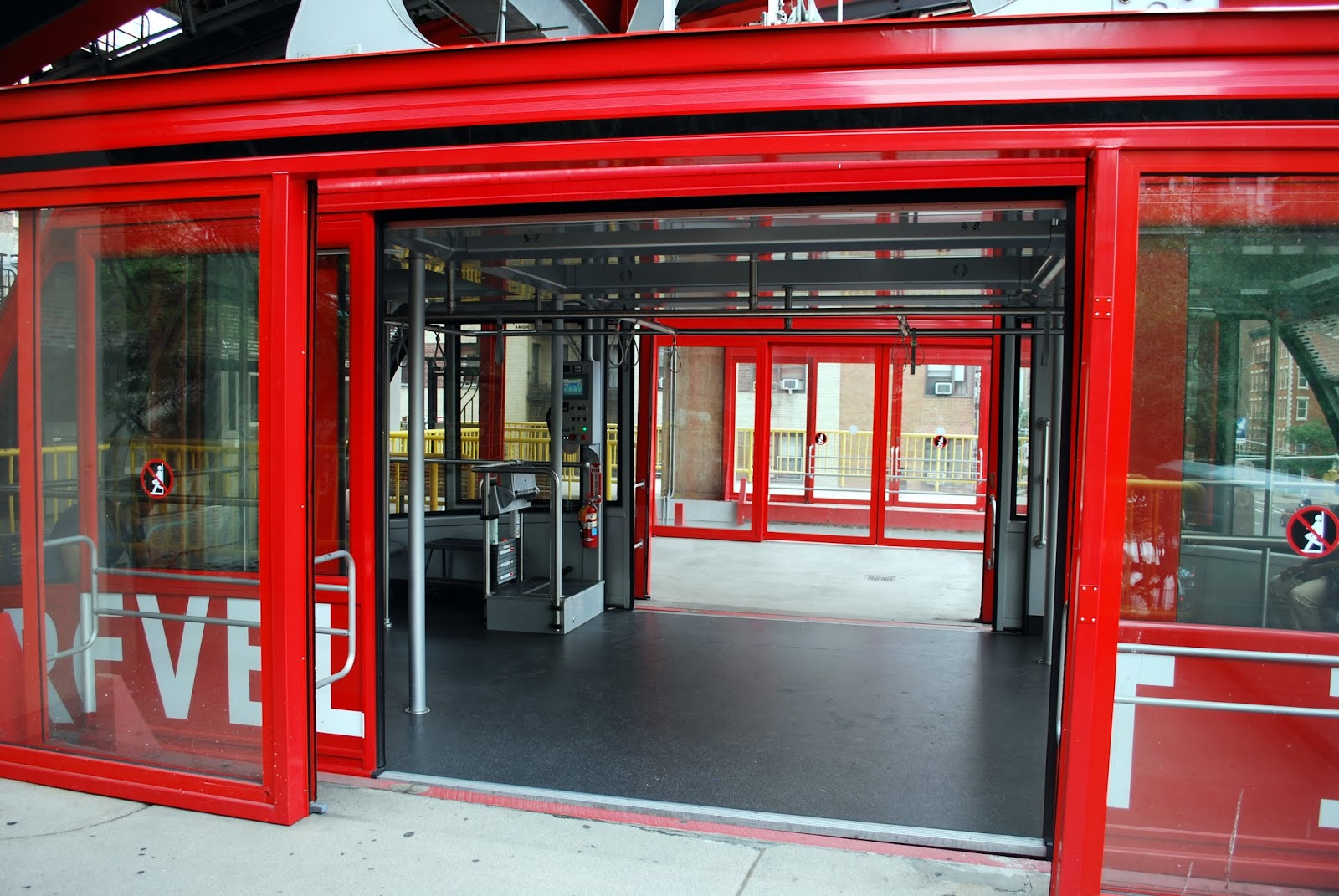
The Roosevelt Island Aerial Tramway was constructed in 1976 to provide transportation to and from the island and midtown Manhattan.  I never rode the tram before, so a friend and I decided we would take a round trip one day just for the experience.  The day we went was misty and threatening rain, but we went anyway.  We first drove to Queens and then went over the Roosevelt Island Bridge to Roosevelt Island


As you can see, the Roosevelt Island Tram runs on cable above the East River alongside the Ed Koch Queensboro Bridge.  In a few months this will be one of the bridges the NYC Marathoners will be running across during the race.


A photo mosaic of some of the sights of the tram station.


On line as the next tram arrives.


All aboard!  The price to ride is the same as a one way ride on a New York City bus or subway: $2.25 paid by swiping a pre purchased Metro Card at a turnstile.


There are a few seats in the tram cab,  but the ride is only around five minutes long, so most passengers stand.


According to Wikipedia: Over 26 million passengers have used the tram since it began operation in 1976. Each cabin has a capacity of up to 110 people and makes approximately 115 trips per day. The tram moves at about 17.9 mph (28.8 km/h) and travels 3,100 feet (940 m) in 3 minutes. At its peak it climbs to 250 feet (76 m) above the East River as it follows its route on the north side of the Ed Koch Queensboro Bridge, providing views of the East Side of midtown Manhattan. Two cabins make the run at fifteen minute intervals from 6:00 a.m. to 2:30 a.m. (3:30 a.m. on weekends) and continuously during rush hours


The view of the East River looking north from the tram....


... the view looking south.


A far away view of the Crysler Building on the left, the Empire State Building on the right


Our tram begins to approach the station.  The ride is very smooth and not at all scary. I hardly felt like I was moving and enjoyed the view! You can watch a Youtube video of a round trip ride on this link if you'd like, that will show you how quick and pleasant the ride is.


Getting closer to the Manhattan 59th Street station....


...and even closer.


My friend and I had to depart the tram and leave through the turnstile, as the trip back had to be paid for separately.  We then waited on the platform a few minutes for the next tram back to Roosevelt Island.


While we waited I took these photos of old time New York City--ivy covered townhouses, water towers, and a vintage sign painted on the side of a building. (all photos will enlarge when clicked on once and then again, as they did in the past, as I disabled the lightbox feature on my blog)


After a few minutes the tram back to Roosevelt Island begins to approach.


Getting closer...


Time to re-board.


A view of midtown Manhattan from the tram, looking north..lots of traffic, as always, on 2nd Avenue!


A good look of the Ed Koch Queensboro Bridge, that connects the borough of Queens to Manhattan


You can see a Manhattan bound tram at the top of the tower in the photo above.


A view of Roosevelt Island looking north from the tram.....


...and a view of the island looking south from the tram.


Two children were in the tram, accompanied by their nanny, and they excitedly chattered the whole ride as they looked out the window.


The speedboat going by on the river below had their attention, and mine!


Back to the Roosevelt Island Tram station.


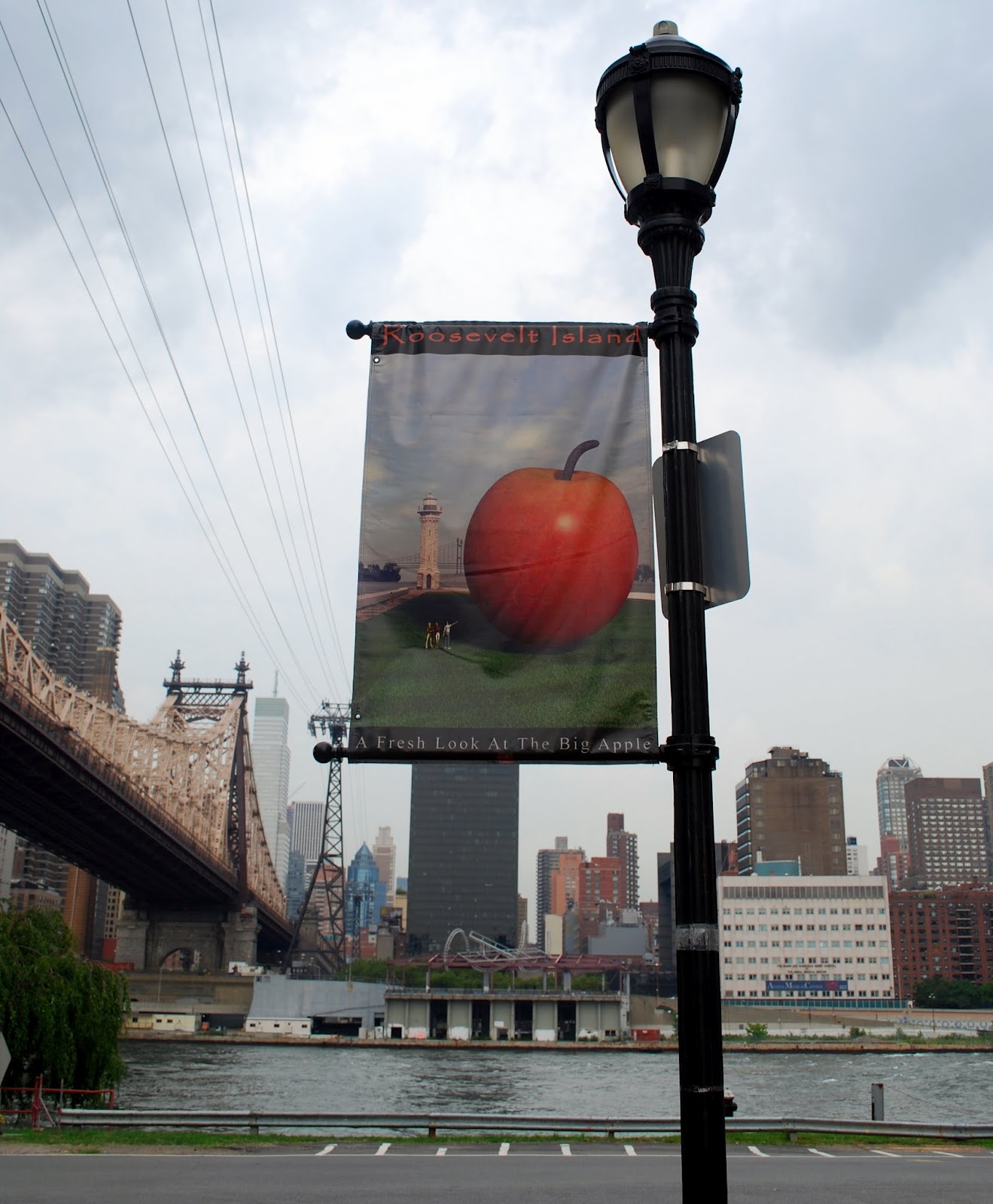
The lamp post sign says: "Roosevelt Island--A fresh look at the Big Apple." In my next post I'lL show you more of the island.

I hope you enjoyed riding the Roosevelt Island Tram along with me--it was fun, wasn't it? I have a lot more of New York City to show on my blog before I move to Colorado.  We recently put our house on the local real estate market and although I'm hoping it sells quickly I know it is a buyers market right now, so I'm taking it one day at a time and continuing to de-clutter as I wait. My house has never looked so good and I am determined to stay simplified when I do move. Thanks again for all your moving tips--I printed them all out and they have been, and will be, very helpful!  Thank you also for your kind and sensitive comments on my 9/11 Memorial post.  It is a very emotional day for us and we will always honor those who were lost and never forget.


I'm linking this post to Seasonal Sunday, Blue Monday, Mosaic Monday, Our World Tuesday,  Outdoor Wednesday, Alphabe Thursday.

  Bookmark and Share

Sunday, July 8, 2012

Flushing Meadows Corona Park, Queens


It was hot and steamy here in New York City this weekend, as it has been almost since summer began a few weeks ago.  Tired of staying inside in air conditioning, and feeling a bit of cabin fever, my husband and I decided to take a drive to Flushing Meadows Corona Park in the borough of Queens, New York.  This 1,255-acre park has historical, recreational and environmental significance as it was created as the site of the 1939/1940 New York World's Fair and also hosted the 1964/1965 New York World's Fair.


Queens is the most ethnically diverse urban area in the world with a population of over 2.2 million, 44% of whom are foreign-born, representing over 100 different nations and speaking over 138 different languages. It seems so suitable that this iconic Unisphere, a leftover from the 1964-65 World's Fair is the centerpiece of the park. The monumental stainless steel globe, standing 140 feet high, 120 feet in diameter and weighing 700,000 pounds, was built and presented to the 1964 World's Fair by United States Steel.  It was "dedicated to man's aspirations towards Peace through mutual understanding and symbolizing his achievements in an expanding universe."


Most of the prior World's Fair pavilions and exhibit halls have been dismantled and some moved to other locations across the United States, but a few other remnants remain. The New York State Pavilion--the tall space age looking buildings seen in the top left and lower left in the photo collage above--have more or less been abandoned to a state of disrepair, but are sentimental icons of the park. The pavilion's old "Theaterama" portion, seen in the upper right of the photo collage, is home to the Queens Theatre, a performing arts center which produces and presents theatre and dance, as well as children's and cultural programming. The New York City building, seen in the lower right of the photo collage above, was constructed for the 1939 World’s Fair. It also hosted the United Nations General Assembly 1946-50. In 1972, it became The Queens Museum of Art. The museum is open, but is also undergoing extensive renovation and expansion. It houses the well-known Panorama of the City of New York, a scale model of the five boroughs built for the 1964 World’s Fair, which I will be showing in a future blog post.

Below is a video slide showing some of the highlights of the 1964 -1965 New York World's Fair that I found on YouTube on this link:


I have many fond memories of visiting the 1964-1965 World's Fair with my parents and siblings when I was young. It was as spectacular to me as Disneyland might have been if I were lucky enough to have been able to visit that as a child.  In fact, Disney did have the same "It's a Small World" ride and exhibit on display at the NY World's Fair (click on the highlighted words to see a video of Walt Disney narrating the ride at the World's Fair). It was one of my favorite exhibits!  I also remember riding the large Uniroyal Ferris Wheel and visiting the GM "Futurama" exhibit (click the highlighted link to watch a video of that). The Vatican Pavilion at the fair displayed Michelangelo's stunning "Pieta" statue, which attracted millions of visitors. Usually, on display in St. Peter's Basilica in Rome, Italy, it had never been taken from the Vatican until Pope John XXIII, before his death, granted permission for it to be brought to the fair. Pope Paul VI agreed with his predecessor to allow the statue to travel to New York in 1964. You can see how the statue looked in the World's Fair exhibit on this link.


Some of the World's Fair statuary and fountains also remain in the portion of the park that was once the fair's grounds, although none of the fountains were working the day we visited, including the fountain that surrounds the Unisphere.


There were also some beautifully landscaped areas in this area of the park, including this small poignant circle of flowers in memory of those who lost their lives in the earthquake and tsunami of 2011.


On the hot steamy day of our visit, we saw many people enjoying the cool shade of the trees in the park, having picnics, or swinging from hammocks that they had the foresight to bring along. Flushing Meadows Corona State Park offers plenty of space for whatever your recreational desires may be--fields are available for baseball, soccer, tennis, cricket, etc. It now includes a stunning park pool and ice rink recreation complex, a zoo, six playgrounds, a botanical garden, a science museum,

and...


 ...... Citi Field baseball stadium, where the National Baseball League New York Mets play their home games. Click here if you'd like to read more about Citi Field I wrote a previous blog post.


US Open photo was taken by me in 2011

The USTA Billie Jean King National Tennis Center (NTC), home to the US Open is also located in the park.  The NTC is open to the public throughout the year, offering three stadiums, plus 22 outdoor and nine indoor courts. Its centerpiece, Arthur Ashe Stadium, is widely recognized as one of the world’s greatest sports and entertainment venues. Click here if you would like to read about my visit to Arthur Ashe Stadium last year for the US Open men's semifinals.

Flushing Meadows Corona Park is definitely a jewel in the NYC borough Queen's crown, and worth a visit!


Bookmark and Share