Showing posts with label Historical People from Brooklyn. Show all posts

Sunday, July 31, 2016

The New Brooklyn Navy Yard


Whenever my husband and I visit New York City we spend most of our time in our favorite borough - Brooklyn, where I was born, raised and lived for most of my life, and where my husband immigrated from Italy as a child.  We have family and friends that still live there and it's always so wonderful to see everyone again. Brooklyn has always been the borough of immigrants--the beginning of many people who came to the USA from all around the world.  Both of my parents were born and raised in coal country in Pennsylvania, and both of my grandfathers were coal miners, but my parents met in Brooklyn during the years around WWII, when my mother and father lived and worked in Brooklyn, as jobs were more plentiful in New York City at that time. Brooklyn has now also become a beacon for many young professionals from across the country who want to live and work in New York City, but found Manhattan too expensive. They have actually made the prices for rent in Brooklyn become almost as high as those in Manhattan in many neighborhoods, but the renaissance of Brooklyn becoming a very desirable place to live and work has brought many new opportunities to the borough.

One example of a changing Brooklyn is the Brooklyn Navy Yard. In all the years I lived in Brooklyn, I had never visited the Brooklyn Navy Yard or area, and I was curious to see how it has changed with the times, as I had heard it has reinvented itself.

(All photos in this post will enlarge for easier viewing if clicked on) 


The Brooklyn Navy Yard opened in 1806. The area produced merchant ships from the time of the American Revolution, but the land was purchased by the federal government in 1901 and became a US Navy shipyard five years later.  By the American Civil War the yard has expanded to employ about 6,000 men, and at its peak, during World War II the yard employed 70,000 people, 24 hours a day.  Ships such as the first ironclad ship, the Monitor, was built. Maine was built in 1890, the battleship North Carolina in 1937, the 1942 battleship Iowa and Missouri, were also built here. America's first angled-deck aircraft carrier the Antietam was built in 1952.  The Navy decommissioned the yard in 1966, after the completion of the USS Duluth, and the yard was eventually sold to the City of New York. 
In 1967, Seatrain Shipbuilding, owned by Seatrain Lines, signed a lease as a nonprofit body to run the yard for the city but closed its production in 1979. By 1987 the Brooklyn Navy Yard Development Corporation failed in all attempts to lease any of the six dry docks and buildings to any shipbuilding or ship repair company.  Without a future in shipbuilding, the Brooklyn Navy Yard now focused on using its space to become an area of private manufacturing and commercial industry.  

As my friends and I entered through the security at the gatehouses of the Yard we began by walking around to see how redevelopment was slowly taking place.  $700 million in new development is underway, and employment in the Yard is planned to more than double in the next few years, from 7,000 to 20,000 jobs by 2020.  As you can see by my photos in the collage above, the Yard is now a mix of old and new buildings with many more new uses in development planned/


My friend suggested that we visit the 117-year-old former Brooklyn Navy Yard Paymaster building, where now the Kings County Distillery has been located since 2012.   They produce moonshine, bourbon and other whiskeys,  using New York State grain and traditional distilling equipment to make their distinctive spirits. Their whiskeys have won numerous awards from the American Distilling Institute, the Craft Spirits Association, and the San Francisco World Spirits Competition.


They are proud to be located just steps away from where the legendary 1860 Brooklyn Whiskey Wars took place and the former distillery district of the waterfront. Their walls had interesting information about that era. The Smithsonian Magazine has an interesting article about the Whiskey Wars on this link (click through the advertisement on the arrow upper right on the Smithsonian link)


Information on how the laws changed to allow for the distilling of whiskey again in New York--click on the photo to enlarge it to read.  We enjoyed sampling some of the different whiskeys that the Kings County Distillery produced, and we also enjoyed speaking with the friendly staff on our tour.

The Kings County Distillery conducts tours Tuesday through Sunday at 3:00 PM and 5:00 PM and on Saturday every half hour from 1:00 PM to 4:00 PM with the last tour ending at 4:00 PM.  For more information about the tours and admission price click here.


Next, we visited Rooftop Reds, in the Yard, wherein the spring of 2015, they introduced the world's first commercially viable urban rooftop vineyard in New York City.  With the help of the upstate New York  Finger Lakes industry and Cornell University, they developed a planter system to grow grapevines that fill their 14,800 square foot rooftop, to one day produce a sustainable and completely Brooklyn vintage of wine. As they wait for their vines to mature they offer events such as rooftop happy hours, pop up dining, and educational viticulture tours and rental opportunities. Until the first rooftop harvest, they are serving wines produced in the Finger Lake region in their bar area.

Since we indulged in samples of whiskey earlier, we did not imbibe any of the wine at Rooftop Red, but we enjoyed their views and the exercise we had walking up the four flights of stairs to visit this rooftop dream in the making.


In fact, one of the views we had from this part of the Navy Yard was a juxtaposition of the old Civil War era "Admirals Row" buildings being torn down in the Brooklyn Navy Yard with the backdrop of expensive new condominium buildings in downtown Brooklyn that have been popping up in the skyline.


Happily, one of the vintage handmade brick buildings that have been preserved is Building 92--the former United States Marine Commandants' Residence, and built-in 1858 by Thomas Ustick Walter, who is considered one of America's most important 19th-century architects.  Building 92 is now a museum that tells the story of  the "Brooklyn Navy Yard: Past, Present, and Future." It introduces the generations of people who worked or were stationed at the Yard and those who lived in the communities surrounding it. They shaped the Yard over time, and are now are creating its future.
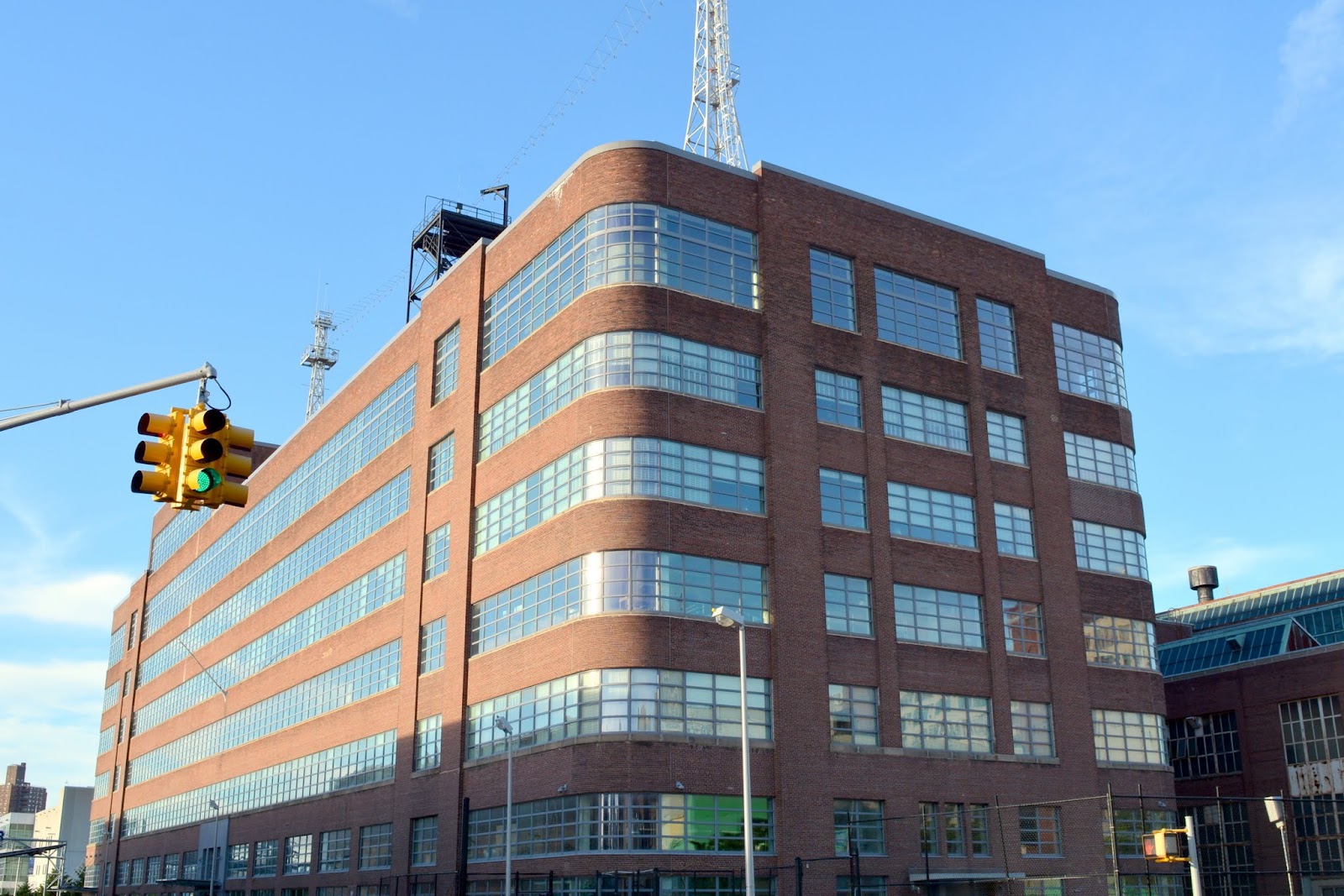

We also saw a part of Steiner Studio in the Brooklyn Navy Yard. It is the largest film and TV studio outside of Hollywood. Opened in 2004 on a 15-acre site containing 580,000 square feet of studio space.


Besides assorted movies and television shows being filmed there, commercials, photos shoots, music videos, Broadway rehearsals, and other events use the studios. 


You may recognize this building in the Brooklyn Navy Yard as the place where one of the 2016 Democratic debates between Hilary Clinton and Bernie Sanders took place at the Duggal Greenhouse.  It has the capacity to hold 3,000 people in its 35,000 square foot venue space.


The location of the Brooklyn Navy Yard, along the coastline of the East River, gives it a wonderful view of midtown Manhattan and the Williamsburg Bridge.


As we walked around we came upon a placard for an event happening that evening called "Fly By Night" by Duke Riley and hosted by Creativetime in the Yard.  My friends heard about this event, especially through a Wall Street Journal article, and thought that perhaps we could see if we could get a standby pass to see it.


At dusk, in a union of public art and nature, over 2,000 pigeons would be encouraged to fly overhead, wearing tiny LED lights instead of the small leg bands that were historically used to carry messages in the past. Duke Riley wanted to pay homage to the role pigeon keeping had in New York and other areas, as domesticated pets and revered for their companionship, sport, and service. When we were children, my friends and I remember seeing rooftop pigeon coops in Brooklyn and watching their owners let them fly in beautiful formations overhead, so this concept was not unusual for us, although we did hear that it was somewhat of a controversial demonstration for this event. 


Fortunately, we were able to get standby tickets to the free event.  As we waited, "crowd watching" was almost as entertaining as the event itself, as we saw some famous people in attendance.


As soon as the blue hour arrived, after sunset, Duke Riley and his assistants whistled and gently swirled flags overhead, while the pigeons took flight and swooped and fluttered in the air like glittering, twirling diamonds.  It was a peaceful and magical sight to see. If you would like to see a short video I took of the pigeon flying overheard go to this link on my Mille Fiori Favoriti facebook  page.  I'd be pleased if you follow my facebook page as well as following me on Instagram, and on Pinterest.


We did not have the opportunity to visit the Brooklyn Grange Farms in the Brooklyn Navy Yard, that operates a 65,000 square foot commercial space on top of building 3, as well as the many other hundreds of tenants in the Yard that allowed visitors. We did enjoy the new developments we did tour and look forward to seeing more in the future, such as the Mast Brothers large chocolate factory and headquarters that will soon be located in the Yard. The coffee company Brooklyn Roasting and Russ and Daughters, who are a century-old purveyor of pickles, bagels, smoked fish and babka, and the first Wegmans Grocery Store in New York, will also be opening in the next year or so.  It is all good news for Brooklyn and I'm happy to see my old hometown thriving so well!

 If you want to visit the Brooklyn Navy Yard click here for further information. 


You can also find me on 


Bookmark and Share

Sunday, April 1, 2012

Plymouth Church of the Pilgrims, Brooklyn, NY


A few months ago I visited a very interesting and historical church that was part of a "Walking Brooklyn" tours my friends and I took this past winter.  Plymouth Church of the Pilgrims, located at 75 Hicks Street, in the Brooklyn Height neighborhood of Brooklyn , New York, was built in 1849. It was founded in 1847 by transplanted New Englanders who wanted a Congregational church like those in which they had been raised, with a simple order of worship, governed by the congregation.


The 21 men and women who founded the church in Brooklyn Heights called as their first pastor Henry Ward Beecher, who soon became considered "The Most Famous Man in America," through his powerful preaching and outspoken opposition to slavery. The preacher and abolitionist's church was also “the Grand Central depot” of the Underground Railroad. Beecher was also the brother of the author Harriet Beecher Stowe, who wrote the novel "Uncle Tom's Cabin." Published in 1853, it was the anti slavery novel that helped lay the groundwork for the Civil War.


An informational placard on the outside wall of the church. As you read, a piece of Plymouth Rock is in the adjoining building, which I will show you later in this post.


Many celebrated Americans became a part of Plymouth Church's history.  It is the only New York City church that Abraham Lincoln worshipped in before he became president.  Mark Twain spoke at Plymouth, as did many other famous writers and activists, including Clara Barton, Charles Dickens, Ralph Waldo Emerson, Horace Greeley, and William Thackery. In February 1963, Dr. Martin Luther King, Jr. preached a sermon on "The American Dream."


The original organ inside the church, installed in 1847, was replaced in 1866 by what was then the largest pipe organ ever built in the United States. The casework and pipes visible today are part of that organ, made by E. and G.G. Hook of Boston. The present Aeolian-Skinner Organ is a four-manual, 59-rank, 4162 pipe instrument.


When fire damaged Plymouth's original church on Cranberry Street, a new red brick Sanctuary seating 2,800 was quickly constructed, fronting on Orange Street behind the ruined original. That first building, now called the Church House, was later rebuilt to house offices, parlors and Sunday School rooms.


It also houses a small museum in its arcade consisting of interesting artifacts from the church's history.


There hangs one of the last known portraits of Henry Ward Beecher.


Henry Ward Beecher made headlines by concluding many sermons with a mock slave auction where he would act as a fast-talking auctioneer in search of donations towards the purchase of slaves' freedom.  Pictured above is Sarah, a 21 year old daughter of a white father and slave mother in Virginia who was going to be sold further south until Beecher heard about her situation and arranged for her to be brought to the church.  The parishioners passed forth donations to raise her $1,200 fee and buy her freedom as well as a small house in upstate New York where she supported herself by keeping chickens and growing vegetables to sell..


One of the most notable slaves whose freedom was bought at Plymouth Church was a young girl named "Pinky." A parishioner placed a small gold ring in the offering plate for her and Beecher placed the ring upon the child's finger.   Pinky, who was renamed Rose Ward, lived in Washington  DC and became a school teacher.  She returned to the church in 1927 to give thanks to the church , and to return the ring, which is now on display.


Photos of a slave pen in Virginia, a painting of President's Abraham Lincoln worshipping in Plymouth Church, and Ulysses S Grant, who visited the church following his Presidency.


A photo of Harriet Beecher Stowe and her novel "Uncle Tom's Cabin," and also a book of her letters and journals


In 1934, Plymouth Church merged with the neighboring Church of the Pilgrims, the first Congregational church in Brooklyn, becoming Plymouth Church of the Pilgrims. Organized in 1844, the Church of the Pilgrims had as its founding pastor Richard Salter Storrs, who served the Church until 1900.  A piece of Plymouth Rock was given to the Church of the Pilgrims in 1840. It was placed here on a pedestal in the Plymouth Church building in 1940 after the merger.


A close up of the Plymouth Rock fragment.


The video above from Brooklyn Independent Television with more interesting information about Plymouth Church, including the first hymnal in the United States with words and music on the same page, that was invented by Henry Ward Beecher.

Tours of Plymouth Church are available by appointment Monday through Friday, 10:00 am to 4:00 pm, and on Sundays after morning worship without an appointment. Please email Lois Rosebrooks, Director of History Ministry Services at loisrosebrooks@plymouthchurch.org or contact her by phone at 718-624-4743 to make an appointment.


I'm linking this post to the following blog events:
 
Mosaic Monday
Blue Monday
Our World Tuesday
Outdoor Wednesday

Many thanks to the blog hosts of these events!


Bookmark and Share


Tuesday, June 14, 2011

Henry Chadwick --The Father of Baseball

Are you, or someone you know, a fan of America's favorite pastime, baseball?  Did you know that Henry Chadwick is called the "Father of Baseball"?

Born in Exeter, England, and raised playing cricket, he became one of the prime movers in the rise of baseball to its unprecedented popularity at the turn of the 20th century. Chadwick moved to Brooklyn, New York, with his family at the age of 12, and became a frequent player of early ball games called "rounders" which was similar to baseball.  In 1856, while witnessing a well-played match between two New York baseball clubs, he became a fan, and decided to do everything he could to make baseball "a national sport for Americans," as cricket was for the English. At the time he was covering cricket matches for the New York Times and persuaded them, and other newspapers, to also cover local baseball games. He then went on to author innovative score keeping practices, introduced statistics such as batting average and ERA, and became the chairman of the first baseball rules committee.


Chadwick died in 1908 at age 83 and is interred in the National Historic Green-Wood Cemetery located in Brooklyn, New York.  "Father of Base Ball" is inscribed on his grave marker.  A popular stop for visitors to this very scenic cemetery, a few of whom leave baseballs behind on his gravestone as a sign of respect.


His grave site is neatly outlined with "bases."

Bronze reliefs of baseball bats, a fielder's glove and a catchers mask decorate the sides of his gravestone.

Photo Source: Baseball Hall Of Fame

Chadwick was enshrined in the Baseball Hall of Fame in 1938, the only writer elected to the hall itself.  He certainly left an indelible mark on the history of the game!

I'm linking to post to the weekly "Outdoor Wednesday" event on Susan's blog A Southern Daydreamer. Thanks, Susan, for hosting each week!

Please CLICK HERE to go to my review blog to see where I was treated to a shopping spree to buy items for my bride-to-be daughter--that post will be coming up in a few days!  There is also information on how you can enter for a chance to win a $25 gift card to HomeGoods through Blogher Prizes and Promotions, contest ending June 30, 2011.


Bookmark and Share

Sunday, April 25, 2010

Brooklyn Celebrity Path


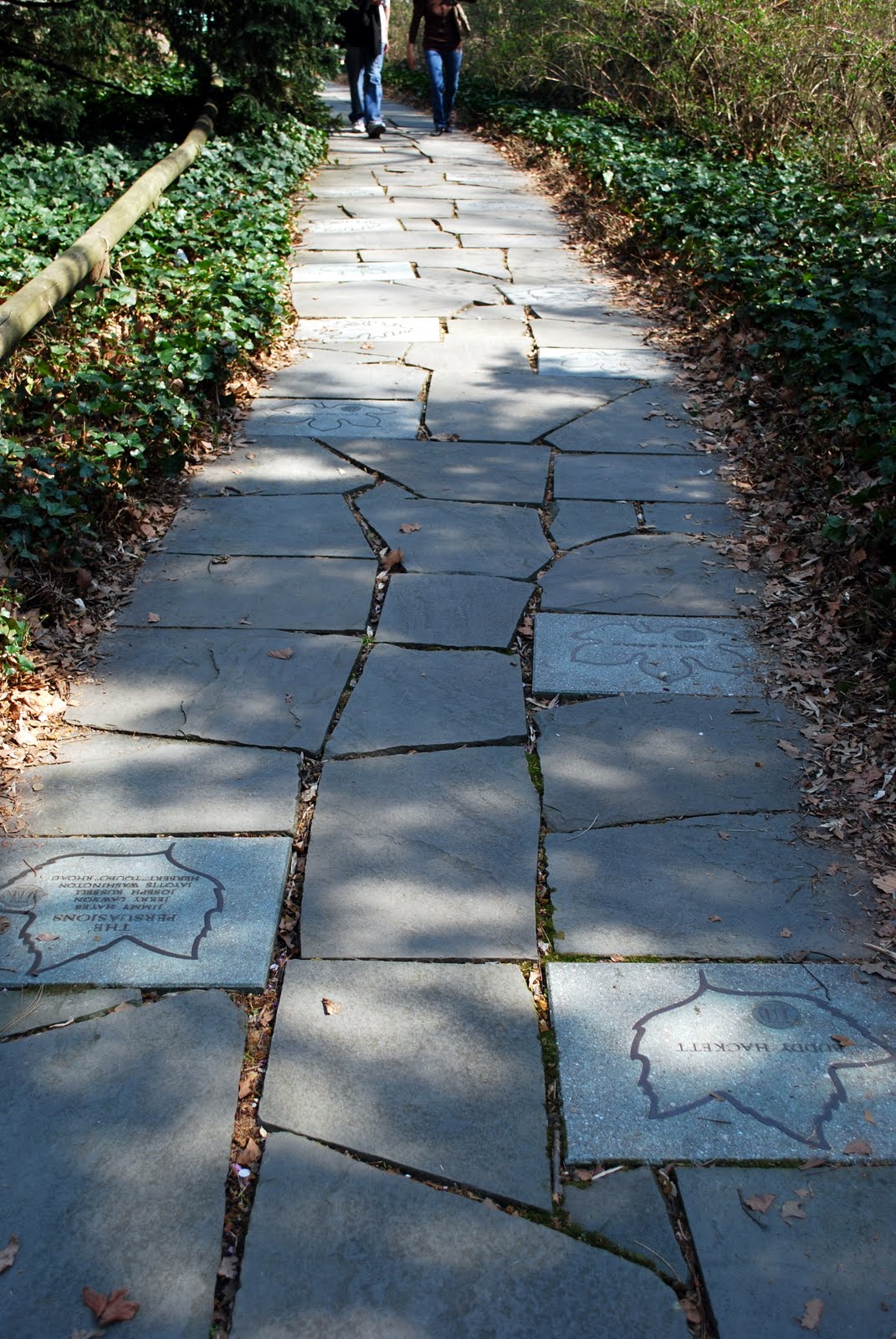
Among the walkways in the beautiful Brooklyn Botanic Garden, located in Brooklyn, New York, is an interesting path where stepping-stones are inscribed with names of famous Brooklynites, both past and present.


Each celebrity honored has his or her name embedded in an 18-by-24-inch concrete paver and decorated with a stylized leaf outline in bronze.


At irregular intervals along the way, approximately 100 artists, poets, performers, and athletes who were born or have lived in Brooklyn are honored.


Each concrete paver also contains a bronze medallion of the Brooklyn Bridge, encircled by the phrase "The Greatness of Brooklyn Is Its People." New names are added to Celebrity Path each June during the borough's annual "Welcome Back to Brooklyn Day."


This photo mosaic shows a representative of the many stones along the path. To enlarge the photo double click it.  It is Brooklyn's answer to Hollywood's "Walk of Fame"!

Among the names are Mel Brooks, Woody Allen, Mary Tyler Moore, Barbra Streisand, Mae West, Maurice Sendak, Maryann Moore, Walt Whitman, Harry Houdini, Larry King, Mickey Rooney, Neil Simon, Connie Stevens, Jerry Stiller, Danny Kaye, Richard Tucker, and many many more!  To see a longer list visit this website.


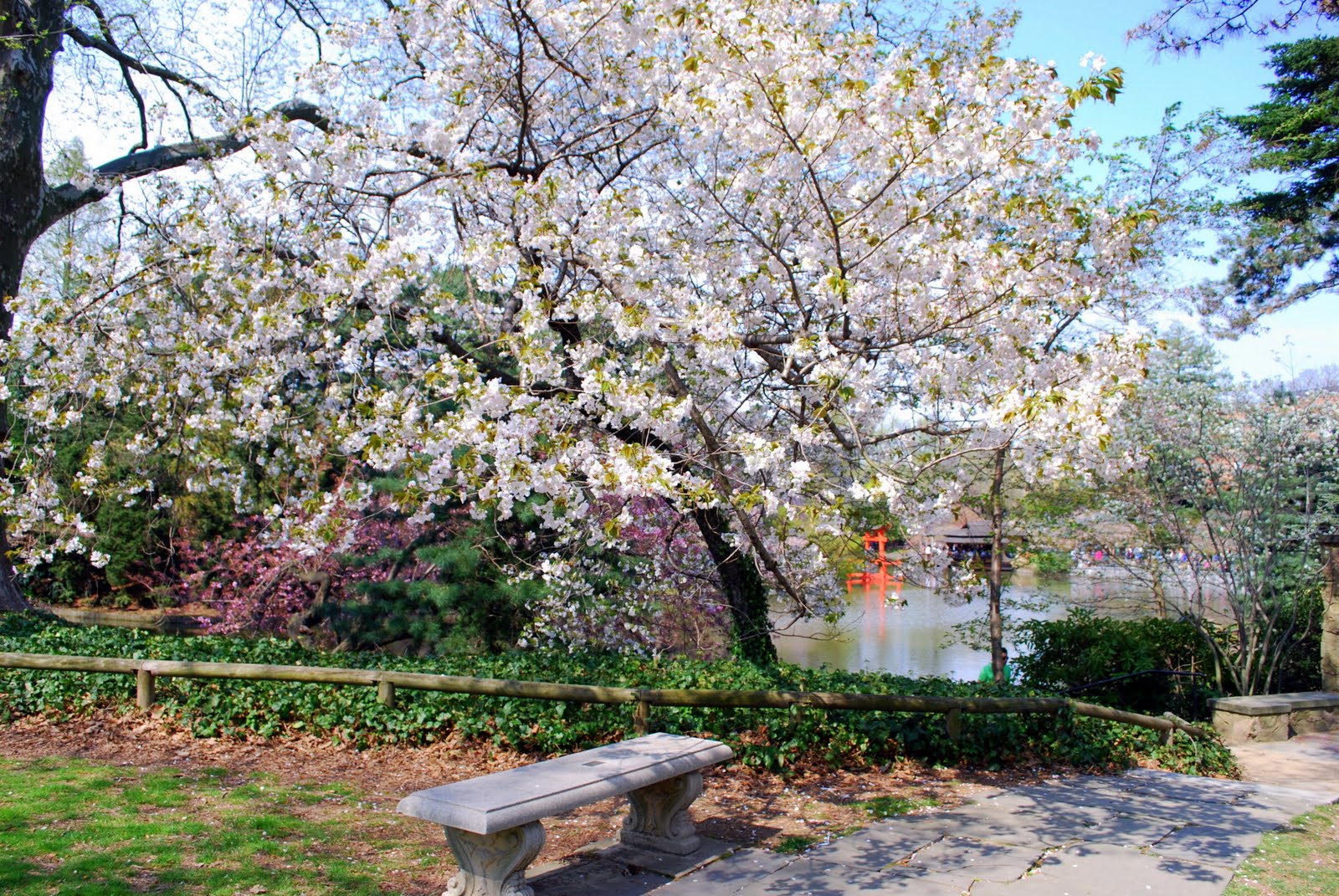
The Brooklyn Celebrity Path meanders through Austrian pines, rhododendrons, and daffodils.  It is located just south of the Japanese Hill and Pond Garden. and across from the Shakespeare Garden.  It is fun to walk along and find familiar names.

Were you surprised to see how many famous people originated from Brooklyn, New York?  Who is the most famous resident, either past or present, from where you live?


Bookmark and Share

Tuesday, March 3, 2009

Lefferts Historic House Museum, Brooklyn, NY

I'm sure you'll be surprised to read that this beautiful authentic Dutch Colonial house is located in Brooklyn, NY!

It's the Lefferts Historic House Museum serves as a public museum within Prospect Park, on Flatbush Avenue, at the intersection of Empire Blvd. and Ocean Ave. It hosts free interactive exhibits, events, and seasonal educational programs for children.

This house was built in 1777 by Lt. Peter Lefferts, a descendant of a New York Dutch family, on the site of his previous home, destroyed by fire in military action at the beginning of the War for Independence at The Battle Of Brooklyn.


Members of the Lefferts family continued to live in the house until 1918 when they donated it to the City of New York. At that time Lefferts Homestead was moved several blocks from its location near Flatbush Avenue and Maple Street to its present location in Prospect Park.


Many of the exhibits and activities developed for the museum are geared towards children and were based on the diary of ancestor Gertrude Lefferts, whose records provide a fascinating insight into the Dutch, African and Native heritage of the area. Activities such as needlework, writing with a quill and pen, candle and soap making, butter churning, cooking on a hearth, are held throughout the year, as well as seasonal events such as gardening and harvesting and annual the flax and fleece event.

It's one of the gems of New York City!

Bookmark and Share