One of the most evocative places to visit for history buffs of the Old West is Bent's Old Fort National Historic Site located on the plains of SE Colorado, just outside the town of La Junta. This reconstructed trading post was the last United States outpost for travelers before they would cross the Arkansas River and enter what was then a territory of Mexico, now New Mexico. The fort was originally built in 1833-34 by brothers Charles and William Bent, and Ceran St Vrain, as a trading post for the Native American fur trade. Finding success the partners soon expanded and built other trading posts to the north and south and stores in Santa Fe and Taos.

Map Source
Bent's Fort soon became an important part of the Santa Fe Trail. The "Father of the Santa Fe Trail" was Captain William Becknell. In 1821 the land beyond Missouri was a vast uncharted region known only for its vast bison herds and Native American inhabitants. When Mexico won its independence from Spain in 1821, trade between Santa Fe and the United States became a possibility, and Captain Becknell was determined to cross the hostile territory to do trade, blazing a path that would become known as the Santa Fe Trail. Soon, many wagon trains were using the trail to head to the southwest. Two passages soon developed, one called the Cimarron Cutoff and the other the Mountain Branch over Raton Pass--see map above. Bent's Fort became an important stop for those on the Mountain Branch of the trail.

Travelers, traders, trappers, the US Army, and the Cheyenne and Arapaho tribes came together at Bent's Fort to rest, eat, trade and buy supplies and repair their wagons. The largest trade with the Native Americans was for bison hides in exchange for the white man's goods. The famous Western Scout, Kit Carson, was a hunter for the fort from 1831 to 1842. The explorer John C. Fremont used the fort as both a staging area and replenishment junction for his expeditions. During the Mexican-American War, in 1846, the fort became a staging area for Colonel Stephen Watts Kearny's "Army of the West." Kearny went on to seize New Mexico for the United States, and seventeen hundred army men and volunteers used the fort as the rendezvous point for the invasion.

Bent's Fort is described as having been a structure 180 feet long and 135 feet wide, built of adobe bricks. The walls were 15 feet in height and four feet thick. It was the strongest post at that time west of Fort Leavenworth in Kansas.

Some of the other principals in the history of Bent's Fort as displayed in a placard in the History Colorado Center exhibit. Please click on to enlarge this photo, and any other photo in this post, to enlarge them to see details.

Click on to enlarge
As one approaches Bent's Fort there is a gravestone of a stagecoach driver, Edward Dorris, who died in 1865 and is buried along with approximately 12 others in graves in a burial ground outside the fort. The Santa Fe Trail was always a perilous route and many perished along the route. On a prior blog post, about New Mexico, I showed one of the last grand landmark stops along the Santa Fe Trail, called Wagon Mound, where many settlers were attacked by Native Americans who were angry that their hunting grounds were being invaded and destroyed. Click here to read that post. That post also shows Raton Pass, which was the mountain pass the Santa Fe Trail traveled over.

Bent's Fort entrance is open to a large plaza surrounded on all sides by two level walls with staircases leading up to them ....

...and shaded walkways along all the corridors leading into the varied rooms.
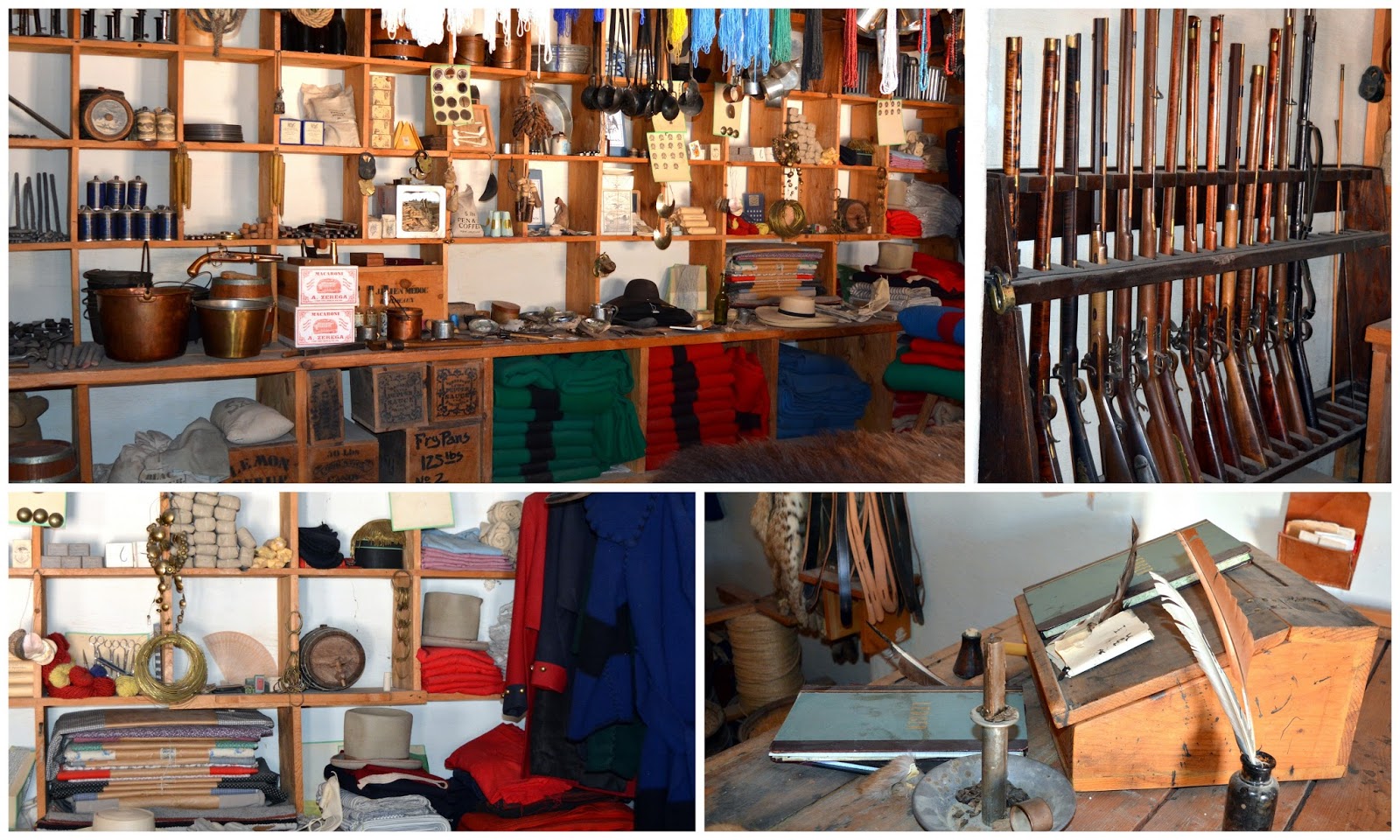
Primarily a trading post, Bent's Fort sold and traded goods in their general store. It was stocked with items such as calico fabric, blankets, cooking utensils, tobacco, muskets, gun powder, knives, buckets, medicines, beads, clay pipes, coffee, chocolate, corn, animal feed, writing material, and so on.

The fort was also operated by people of many nationalities and vocations, including blacksmiths, trappers, carpenters, wheelwrights, gunsmiths, cooks, cattle herders, clerks, etc., who would offer their services for a fee to visitors to the fort,

The kitchen was staffed with cooks, including a slave of Charles Bent, Charlotte Green, who was famous for her pumpkin pies and flapjacks.

The ground level rooms also consisted of meeting rooms, and offices

As the resident Manager, William Bent oversaw all trade at the fort. He occupied private quarters in the fort, but also lived with his Cheyenne wife and family in their village as well.

Bent's Old Fort often has days that feature costumed living history interpreters that provide guided tours and demonstrations, but my husband and I visited between tours and did a self guided tour instead, with literature provided by the staff. You can check the park web site for a calendar of events and tours held at the park on this link.

View of the fort entrance from the second floor...

...and from the other side of the ramparts.


Most of the rooms upstairs were used for boarding, and were re-furnished in period style.

There was even a billiard room upstairs. Billiards, card games, and chess and checkers were played to ease the long nights and days and help the fort's employees deal with boredom and home sickness.
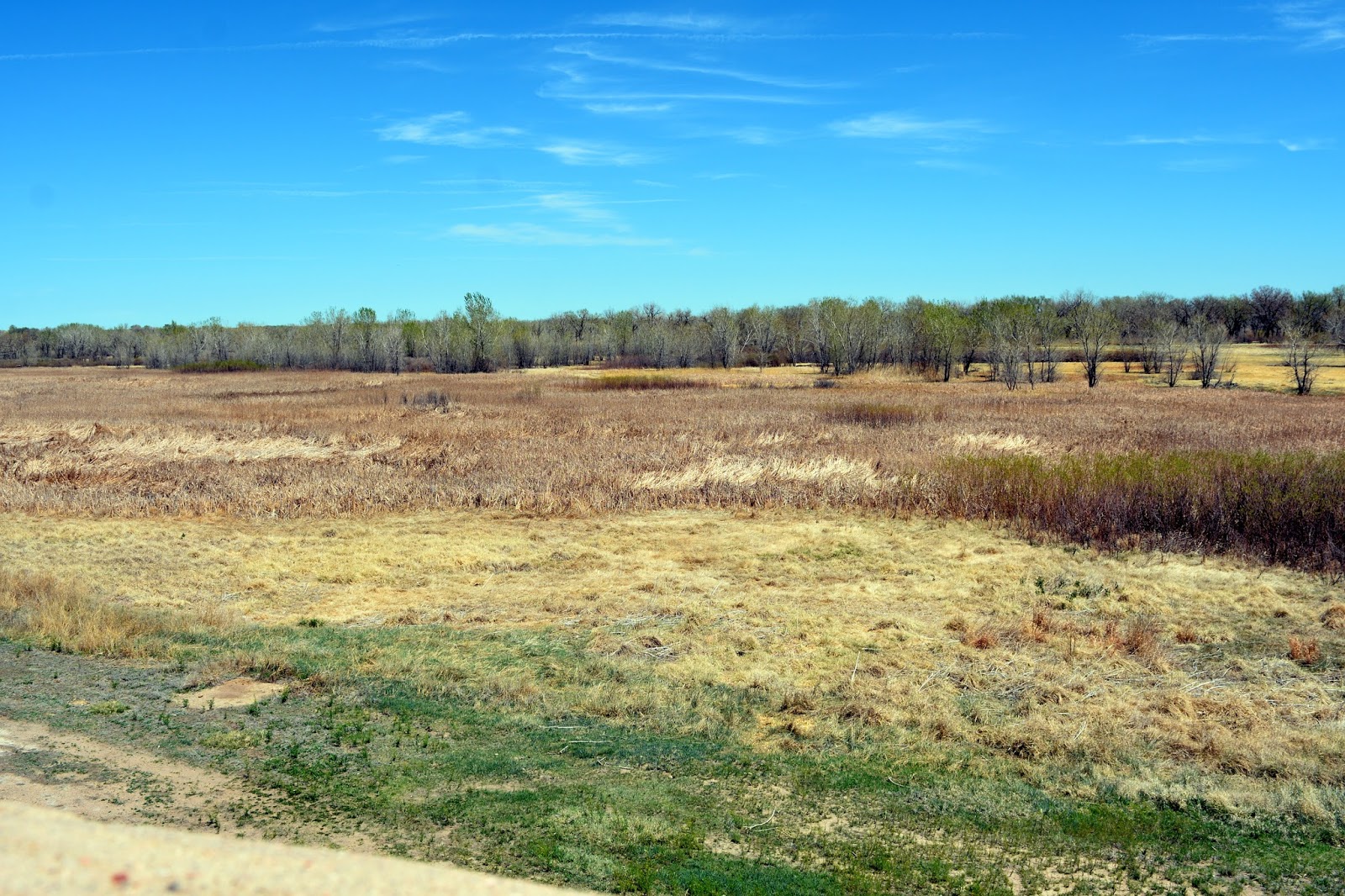
A view of the Colorado plains from the roof top of the fort.

Often referred to as the "Castle on the Plains," Bent's Fort also had cannons for reinforcement. The fort was never attacked, however, and the Bents worked hard to broker peaceful relations with all that they came in contact with.
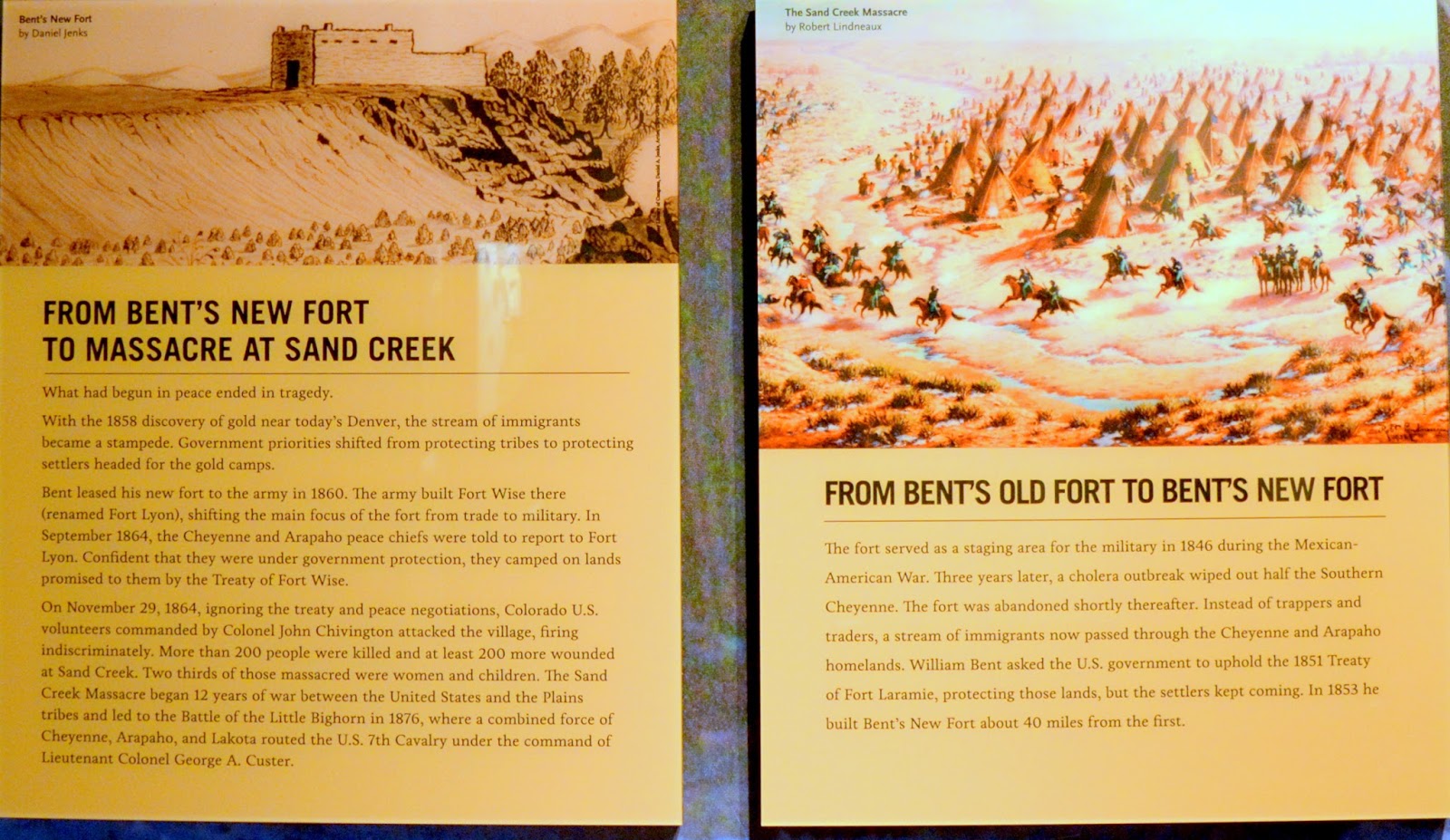
More informational placards from the History Colorado Center. Click on to enlarge
After the war with Mexico, Charles Bent became the Governor of New Mexico, but on January 19, 1847, revolting Mexican and Pueblo Indians murdered him and other Americans in Taos.
The US government never paid the Bents compensation for using the fort for housing and supplying Kearny's troops during the Mexican American War. When there was a cholera epidemic and increasing unrest among southern Native American tribes who raided the Santa Fe Trail wagon trains, business declined at Bent's Fort and it fell on hard times. William Bent offered to sell the fort to the US Army in 1849, but they declined the offer. So a frustrated Bent moved his operations out and set fire to the fort, and abandoned it.
William Bent then built a new fort at the Arkansas River in 1853, known then as Big Timbers, but the glory days of trade were over, and it was not successful. Bent leased this fort to the Army in 1860, which then constructed Fort Wise--later renamed Lyons-- nearby. Ob November 29, 1864, Colonel John Chivington marched towards the Cheyenne Sand Creek Reservation, to destroy the native American's camped there, lead by the peace chief Black Kettle. Chivington posted a guard on William bent to prevent him from warning the Cheyenne leader and his people. You can read the story of the Sand Creek Massacre that occurred nearby in the placards above, or on my blog post --here--about that event. William Bent died heartbroken in Westport, Kansas in 1869.

Although most of Bent's Fort had been abandoned it was still used over time as stagecoach station and later as cattle corrals. In the 1950's the Colorado State Historical Society acquired the Bent's Old Fort and arranged for archaeological investigation to determine the fort's outlines. It was declared a National Historic Landmark in 1960.

Exhibit at the History Colorado Center of artifacts found at Bent's Old Fort.
More archaeological excavations occurred after it became part of the National Park Service system and the park was reconstructed in 1976 with the help from these artifacts, diaries sketches and paintings.
Bent's Old Fort National Historic Site preserves for the future the remarkable history of the fort as a place of early trade, it's role on the historic Santa Fe Trail, as well as its role in Western Expansion. It is a fascinating place to visit to learn about the Traders, Tribes and Travelers of the old west!

I'm linking this post to the following blog events:
All Seasons, LNR-Seasons, Through My Lens Monday, Mosaic Monday, Life Through the Lens Monday, Mellow Yellow Monday, Inspiration Monday, Good Random Fun, Nature Notes, Grand Social, Photo Tunes, Our World Tuesday, Ruby Tuesday,Wanderful Wednesday,Wordless Wednesday, Oh My Heartsie Girl's Wonderful Wednesday, Outdoor Wednesday, Share Your Cup Thursday,Little Things Thursday, Travel Photo Thursday, Thankful Thursday, Friday Photo Journal, Skywatch Friday, Sweet Inspiration, Weekend Travel Inspiration, Friday Features, Pink Saturday
Thank you to all the blog hosts!




 Posts