Sunday, July 26, 2026

The Enjoyment of Hiking On Our Local Colorado Trails


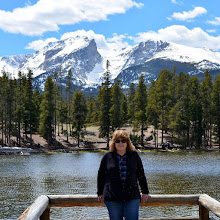
Our neighborhood has many miles of local trails. Some were built and are maintained by our HOA Master Association, and therefore are private for residents only, and some are our county's open space parks available to all.


This is a beautiful world, and all who go out under the open sky will feel the gentle, kindly influence of nature and hear her good tidings." ~ Enos Mills

Some of the trails are concrete, some are gravel, and others are dirt. Many are utilized by hikers, bicycle riders, and horseback riders. I am not the fastest hiker going uphill, but slowly and surely, I manage. Taking photos helps me get a bit of rest before I go on.


"For how many years did I wander slowly...what wonders and glory I could have missed had I ever been in a hurry! ~ Mary Oliver


" Keep close to Nature's heart...
and break clear away, once in a while, and climb a mountain or spend a week in the woods. Wash your spirit clean."
~ Johm Muir


The trails pass red rock formations and meadows, and some gain a thousand feet of elevation beyond our area's average 6,000 feet (1828 Meters) elevation.

Over the years, my husband and I have walked the trails alone, with each other, our children, and with friends.


"The battle for conservation will go on endlessly.  It is part of the universal battle between right and wrong." 
~John Muir


I have photographed hundreds of wildflowers along the trails...these were just a few!


"I hope you are blessed with a heart like a wildflower
Strong enough to rise again after being trampled upon. tough enough to weather the worst of summer storms, and able to grow and flourish, even in the most broken places."
~ Nikita Gill


We have walked in all kinds of weather and all the seasons...in spring and summer...


...in Autumn...

...and in winter.


"To the attentive eye, each moment of the year has its own beauty, and in the same field, it beholds, every hour, a picture which was never seen before, and which shall never be seen again." 
~ Ralph Waldo Emerson


In every walk with nature one receives far more than he seeks.”
~ John Muir


On days we can't walk, and sadly, that has been many days because of high summer heat and poor air quality due to wildfires in our state this summer, my husband and I go to our nearby community gym. 
It's small, but it is usually not crowded, and it has enough machines to choose from to do an hour workout. I like that the gym bicycles can be programmed to show rides through different national parks and scenic rides all around the world!


Even the twin fawns that were born in our backyard in June have been feeling this summer's excessive heat. They have been seeking out the shade of our trees for coolness. It has been fun watching them grow!

Where do you like to walk where you live? 
How has the weather been where you live this season? 


Sunday, July 19, 2026

Denver's Big Blue Bear!


Standing outside the Colorado Convention Center, on 14th Street between California and Stout in Denver, is a 40-foot (12.192 meters) Blue Bear Sculpture that peers into the center's windows.


The official name for the sculpture is "I See What You Mean," and it is a popular Denver Public Art sculpture that has been peering into those windows since 2005.


Sculpted by artist Lawrence Argent, the structure is clad in polymer-concrete and depicts an American black bear standing on its hind legs, peering into the Convention Center's lobby. Argent's decision to sculpt a bear was based on the wildlife native to the Colorado Rocky Mountains. The black bear is the only species of bear currently found in the mountain range, and is seen by many as a symbol of the region. According to Wikipedia, Argent was inspired specifically by a newspaper photo of a bear peering through someone's window, which he stated "resonated with him."


Artist Lawrence Argent did not originally intend the bear sculpture, made of steel, polymer, and concrete, to be vividly blue! In fact, the blue color was a complete accident. Originally, the bear was going to reflect the colors of Colorado in shades of sandstone, but a printing error for its prototype showed Argent just how remarkable this piece could be in a bold hue, reflecting Denver's deep blue skies.


Inside the wonderful History Colorado Center, there is a smaller replica of the Big Blue Bear peering in a window that children can stand in front of in an exhibit called "Denver A to Z."  
My grandchildren are almost all teenagers now, but they loved to visit this very "hands-on" museum when they were little, and this photo collage shows three of them excited to stand in front of the bear.


Blue sculptures in Denver seem to be a theme... a few months ago, I blogged about another iconic giant blue sculpture of a Mustang that stands along the road as one approaches or departs Denver International Airport in this post


In the History Colorado Center is a colorful replica of the "Welcome to Colorful Colorado" road sign that greet travelors of as they cross into Colorado from over 3 dozen major highway locations. These signs have greeted visitors since 1950! 


There are many wonderful places to visit in Denver--I hope you'll come for a visit someday soon!


Sunday, July 12, 2026

Four Mile House Historic Park

Four Mile House is the oldest standing structure in the city of Denver, Colorado!

The oldest portion of the house was built in 1859, and the location served as the last stagecoach stop before entering what was then the "Colorado Gold Rush" city of Denver, on the Wells Fargo Butterfield Stagecoach route between El Paso and Denver.


Routes from the plains towards the Front Range of the Rocky Mountains.
 
The Colorado Gold Rush, originally known as the Pikes Peak Gold Rush, started in 1858 and was the second largest mining excitement in United States history after the great California Gold Rush a decade earlier. Over 100,000 people participated in this rush and were known as “Fifty-Niners”, a reference to 1859, the year the rush to Colorado peaked.

“Pikes Peak or Bust” was the motto of many emigrants, a reference to the mountain in the Front Range that guided many early prospectors westward over the Great Plains.

Gold Rush Prospectors

Gold prospectors were the first major non-native population to enter the region, leading to the creation of many early towns, including Denver, Boulder, Golden, and numerous smaller mining towns, some of which are still active communities today.

As prospectors flooded the region in search of quick riches, the rapid population growth led to the creation of the Colorado Territory in 1861 and to the U.S. State of Colorado in 1876.

The rear of Four Mile House

Four Mile House was built in late summer or fall 1859 by the brothers Samuel and Jonas Brantner. In 1858, Jonas had come to Colorado from Ohio to look for gold. After prospecting unsuccessfully on Cherry Creek and the South Platte River, he gave up and staked a farming claim along Cherry Creek.

In August 1859, Jonas’s brother Samuel arrived in Colorado, and they soon built a two-story log house on Jonas’s land. Samuel, his wife, and their infant daughter occupied the house in October 1859.

 The house might have acquired the name “Four Mile House” in 1859 or 1860, when part of the Cherokee Trail began to be used by mail carriers traveling between Colorado City (now part of Colorado Springs) and Denver as well as by immigrants following the Smoky Hill Trail from Kansas to Denver. It was four miles from the house to Broadway in the city of Denver.


In 1860, the Brantners sold Four Mile House to Mary Cawker. A widow from Wisconsin, Cawker moved into the house with her two children that September. She operated it as a stage station with a bar downstairs and a tavern, and held dances on the second floor.


 Over the next decade, stages regularly stopped at the house to change horses and to allow passengers to change clothes and freshen up before they arrived in Denver after their 700-mile, 12-week journey across the midwestern and high desert plains.

Mary Cawker sold the house to Levi Booth for $800. An attorney originally from Wisconsin, Booth moved into the house with his family in August 1864. He continued to operate the house as a stage stop and tavern for the rest of the decade.


Over the years, the current U-shaped plan evolved as three buildings were butted together to accommodate changing needs. Together, the 1859 squared log construction, the circa 1860s woodframe construction, and the 1883 brick portions reflect the evolution of rural housing during the Denver area’s early settlement period.

Glendale neighborhood of Denver in the distance of the Four Mile House grounds.


In 1946, the Booth family sold Four Mile House to Glen Boulton, who stayed there for nearly thirty years. During those years, the house, previously on the edge of the city, was surrounded by development as Denver spread southeast and Glendale became an enclave of businesses and bars. In response to encroaching development, preservationists worked to ensure Four Mile House’s survival. In 1968, the house became a Denver landmark, and in 1969, it was listed on the National Register of Historic Places.


In 1977, the nonprofit Four Mile Historic Park Inc. was formed to care for the property, which was opened to the public the next year as a living history museum.

One of the members of our friends group had volunteered as a tour guide for many years at Four Mile Park, and she decided to plan an outing for us to take a self-guided tour of the park and house, and then have lunch afterwards at a local restaurant.

Click on the collage to enlarge it.

We enjoyed looking at all the interesting history exhibits about Four Mile House in its Visitor Center...


...and then strolling the grounds to see how the land had been developed as a farm in the late 1800s, which included a school house...


... and a blacksmith shop, a summer kitchen, and a barn housing 1800s era transportation vehicles.


We had a guided tour of the inside of Four Mile House with a volunteer who told us more of its history.

Four Mile Historic Park is a great resource for educators and students to learn about Colorado’s early history and hosts many events for all ages during the year.


If you are a history enthusiast, and would like to learn more about Four Mile House there is an interesting PBS Experience show about it on YouTube with fascinating vintage photos of the covered wagons and stagecoach rides--see video above.

We we all so glad to see that Four Mile House was preserved and is now a wonderful view back into the pioneer days of our nation's history.


Sunday, July 5, 2026

Happy Summer Happenings!


Happy Month of July! I hope everyone is having an enjoyable summer. The twin fawns that were born in our backyard --click here to see that post-- visit us from time to time, and are growing well. They are very curious and full of energy, and their Momma Doe keeps a close eye on them.


My front garden perennials are all growing well. I did not plant any annuals this summer as all of Colorado is in a severe drought and we are under outdoor watering restrictions. Happily, the decorative plaques and statues help fill in the blank spots.


Our neighborhood was once a functioning cattle ranch, and the barns and a section of land have been converted into a very active equestrian center.


 The main barn has actually been placed on the National Register of Historic Places! You can read a post I wrote about this at this link.


Our oldest granddaughter took riding and horsemanship care lessons in the riding school in June. They learn how to care for a horse, their nutrition, grooming, and hoof care, saddle, bridle, and tack care. How to mount a horse, lead, turn, gallop, and go over obstacles. Also, barn safety and arena etiquette.


 A short YouTube video of our granddaughter practicing a slow gallop.  *Edited to change this to a trot, not a gallop, as Beth explained to me in her comment.

She really enjoyed the lessons and now feels more confident horseback riding and may pursue taking more involved Western Riding lessons.


Our daughter, son-in-law, and her brother-in-law were fortunate to see a FIFA World Cup game at Los Angeles Stadium between Spain and Austria. Spain won the game 3-0. 


She sent us this video of how the Los Angeles Stadium reacted to Spain's first goal!


It is hard to believe that it has been ten years since the first photo in the collage above of our grandchildren at a Fourth of July barbecue we had at our house! 
This 4th, we celebrated with our son, daughter-in-law, and family in their neighborhood at a delicious catered barbecue in their community park. The gathering also included a water slide, a bounce house for young children, and face-painting artists. 
They usually begin the event with a large bicycle parade led by the local fire department, but this year, many firefighters from fire departments across Colorado have been sent to help with multiple wildfires burning in our state. 
Many Wildland Urban Interface areas in Colorado also canceled fireworks shows this year to keep safe.


I hope summer will bring joy to all!