The last stop on the Princess Cruise East Coast trip was Charleston, South Carolina. As our off-ship excursion, my husband and I decided to take a bus tour of the city, including a few stops at historical places.
Charleston was founded in 1670 as Charles Town, honoring King Charles II, at Albemarle Point on the west bank of the Ashley River but relocated in 1680 to its present site. Charleston adopted its present spelling with its incorporation as a city in 1783.

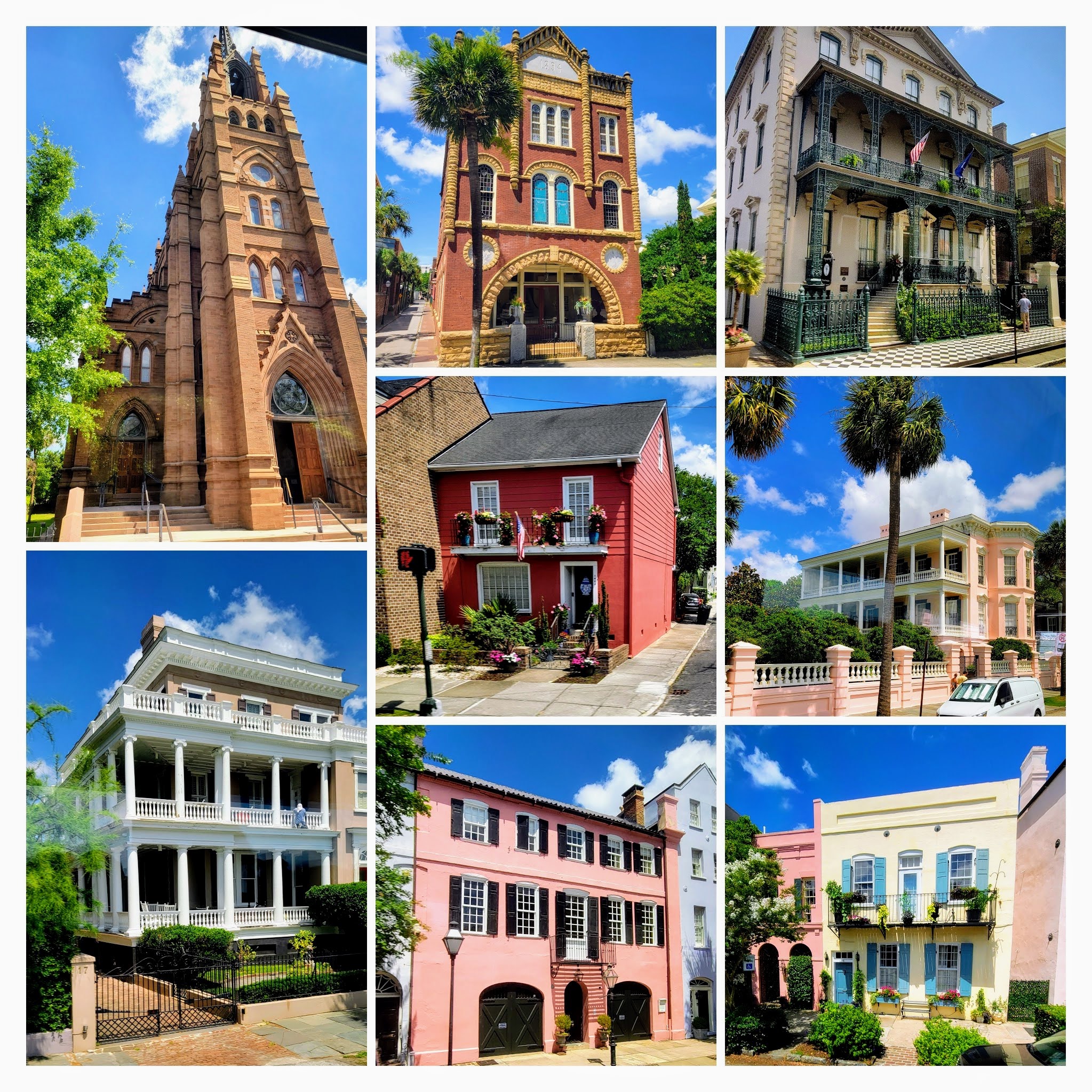
Charleston is now the most populous area in South Carolina in the US. Its predominant antebellum architecture was charming to see as our tour bus drove around the city.

We drove around The Citadel's campus.
The Citadel Military College of South Carolina is a public senior military college established in 1842. It is the third oldest of the six senior military colleges in the United States. The Citadel was initially established as two schools to educate young men from around the state, while simultaneously protecting the South Carolina State Arsenals in both Columbia and Charleston
We could see some co-ed students participating in drills on the large central campus as the bus drove around the grounds.


Please click on the photo to enlarge it to read the informational placard.
We also stopped to tour the Joseph Manigault House.
The Joseph Manigault house was built in 1803 and was designed by Joseph Manigault's brother Gabriel, who also designed Charleston’s current City Hall. Joseph was a wealthy rice planter who inherited several rice plantations and over two hundred slaves from his grandfather, and married into a wealthy family. His wife's father, Arthur Middleton, was one of the signers of the Declaration of Independence. The house was declared a National Historic Landmark in 1973 and is now a museum. It reflects the urban lifestyle of a wealthy, rice-planting family and the enslaved African Americans who lived there.

The Gate Temple entrance to the Joseph Manigault House Museum--enlarge the photo above to read the informational placard about it.

Please click on the photo to enlarge it,

The Manigault house's focal point is a "flying" staircase in the hall. The numerous rooms have been restored to their original color schemes and adorned with an exceptional collection of American, English, and French period furnishings.

I enjoyed seeing some beautiful flowers, window flower boxes, and moss hanging off the many live oak trees in the city,

Our tour bus passed a horse-drawn carriage tour--I made a note to do this tour if we ever return to Charleston in the future.

A carriage ride would be a pleasant way to slowly pass all the magnificent Charleston mansions!

Another thing I regretted not being able to do was pick up a handwoven basket or other braided sweetgrass handicraft that was for sale! For more than 300 years, the Gullah people in Charleston have been weaving baskets using locally harvested bulrush, a strong yet supple marshgrass that thrives in the sandy soil of the Lowcountry. Originally used as winnowing fans to separate the rice seed from its chaff, sweetgrass baskets are regarded among the nation’s most prized cultural souvenirs.

The day we visited Charleston was my birthday so we celebrated at one of the specialty restaurants on our cruise ship and I enjoyed a delicious lobster tail!

We enjoyed watching sailboats outside the windows of the restaurant as we dined.

That evening we enjoyed listening to a fun Elton John impersonator's concert in the ship's theater.
It was the end of a beautiful day!
You can also find me on:
I'm linking with:
Mosaic Monday, Hello Monday, Through My Lens Monday, Hearth, and Soul Link Party, Anything Goes Monday, You Are the Star Blog Hop, Nature Notes, Home Matters Linky Party, Good Random Fun, Happiness Is Homemade, Tuesdays With A Twist, Talk About It Tuesday, The Happy Now Tuesday, Wordless Wednesday on a Tuesday, Wordless Wednesday, Wordless Wednesday 2, Wednesday My Corner of the World, Wonderful Wednesday, Thankful Thursday, Little Things Thursday, Thursday Favorite Things, Skywatch Friday, Generic Link Up, Fantastic Friday, Saturday Sparks, Saturday Critters, Sunday on Silverado, Sunday Photo


 Posts