Tuesday, June 15, 2010

East Village and Veniero Pastry Shop and Cafe

(All photos can be enlarged by clicking on them once, and then again.  Return to the blog post by using your browser's back arrow)

The East Village is one of downtown Manhattan's most vibrant neighborhoods.  It  extends from 14th Street south to Houston Street, and east of Fifth Avenue. The neighborhood is a lively mix of students, artists, and young professionals. There is a large and varied assortment of antique shops, bookstores, record stores, specialty shops, and ethnic restaurants. The East Village is a mix of old mansions and tenements and recent new condo constructions. Many people are attracted to the neigborhood because of its relatively affordable rents compared to other downtown areas.  I find it a fascinating neighborhood to visit and explore.


This beautiful Federal Style house, located at 21 Stuyvesant Street, was built in 1803 on land owned by the Stuyvesant family since the 17th century. It was built by Petrus Stuyvesant, the great-grandson of Peter Stuyvesant, who was the last director general of the city then known as New Amsterdam, until it was ceded provisionally to the English in 1664 and renamed New York. It was a wedding gift to Stuyvesant's daughter Elizabeth, and her husband, Nicholas Fish, a Revolutionary War hero and veteran of Valley Forge. Fish was also a close friend and political ally of Alexander Hamilton. Their son, Hamilton Fish, was born here in 1808 and called it home until 1838. He would go on to became a United States Representative (1843-45), New York State Governor (1848-49), United States Senator (1851-57) and United States Secretary of State (under President Grant from 1869-1977),

An informational plaque on the Landmarked house. 


When I am in the East Village I can't resisit visiting the Veniero Pastry Shop and Cafe, located at 342 E.11th St. NY,NY. This Italian pastry shop has been continuously owned and operated by the Veniero Family since 1894

Veniero's has stamped copper ceilings, Italian marble floors, and stained glass windows, and has an atmosphere just like an old world style Italian cafe.

Upon entering the pastry shop, you are greeted by a wonderful 40 foot display of traditional and regional Italian confections, a vast variety of large and miniature pastries, and assortments of hand-made Italian butter cookies.
My husband and I decided to sit in the cafe section to enjoy a cappuccino and a pastry.

Instead of a menu they they use picture cards, so that you will see what you order.

So many wonderful selections!  It was not easy to choose.

My husband had a plain Baba Rum, one of his favorites....
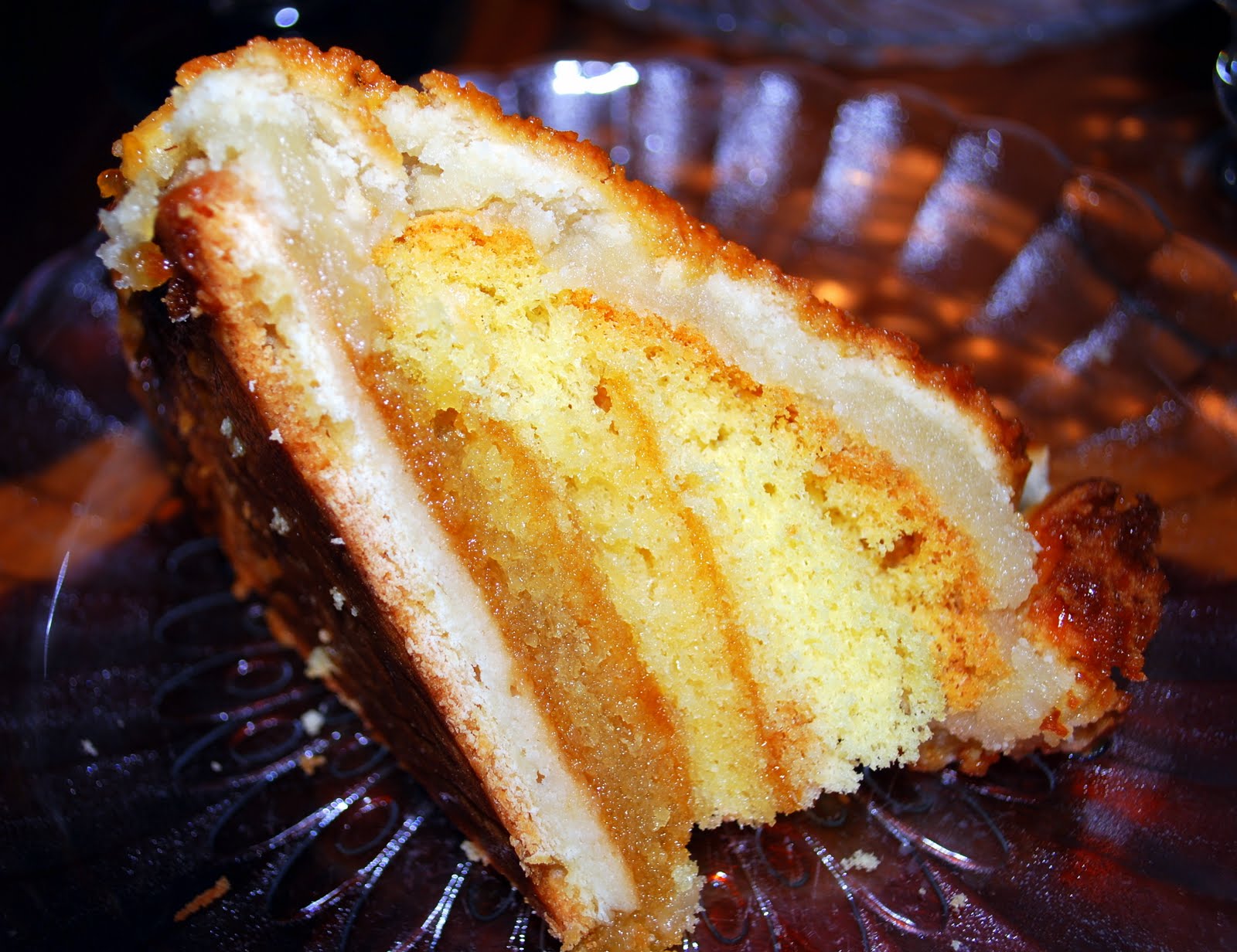

..and I chose a Torta di Mandorle as I love almond flavor, and this cake was almond lover's delight!


Along with our cappuccinos, the desserts were perfect way to re-energize for a little more of our exploration of the East Village neighborhood, which, of course, I will blog about at a future date.

I'm linking this post up with Susan's Outdoor Wednesday event at her blog, A Southern Daydreamer, and Jenny's Alphabe Thursday event on her blog Jenny Matlock.  The letter this week is "V."  Please visit both blogs and join in all the fun!


Bookmark and Share

Sunday, June 13, 2010

Happy Flag Day! You Know Betsy Ross, but what about Samuel Chester Reid?


Happy Flag Day! The photo mosaic above was made with photos that I took of the American flag at different times and places in New York City. In 1916, President Woodrow Wilson issued a proclamation that officially established June 14 as Flag Day.  Then, in August of 1949, President Harry Truman signed official legislation which proclaimed June 14 as National Flag Day.  

On June 14, 1777, the Continental Congress of the United States approved the official design for the flag featuring 13 white stars in a circle on a field of blue and 13 red and white stripes – one for each state. President George Washington interpreted the symbolism of the United States Flag this way: "We take the stars from Heaven, the red from our mother country, separating it by white stripes, thus showing that we have separated from her, and the white stripes shall go down to posterity representing Liberty."


Most Americans know the story of Betsy Ross being credited with making the first stars and stripes American flag in 1777, but did you know that Samuel Chester Reid (August 24, 1783 – January 28, 1861) was the person who designed the flag as we know it today?

According to a scholarly article written by C. W. Tazewell on this website: "Capt. Reid designed the third version of the Stars and Stripes in 1818 at the request of a Congressional Committee headed by Peter H. Wendover, Representative from New York City. The original flag of the United States of America was created by the Resolution of Congress on June 14, 1777, with thirteen stars and stripes. The second Flag Act was passed in 1794 to authorize fifteen stars and fifteen stripes due to the entry of Vermont and Kentucky into the Union. By 1818 there were twenty states and entry of others was expected soon. It was impractical to continue to add stripes as more and more states were admitted. So, Wendover's committee adopted Reid's proposal to fix the stripes at thirteen with one star for each state. On acceptance of the design by Congress, Mrs. Reid made the first new flag with silk provided by the government. It was flown from the Capitol dome on April 13, 1818."


Samuel Chester Reid was an officer in the United States Navy who commanded a privateer during the War of 1812 General Armstrong off the Azores, he took on a British fleet, delaying its arrival in Louisiana, and enabling General Andrew Jackson to triumph over the British at the Battle of New Orleans.


For many years, Reid was in an unmarked grave in Brooklyn, New York's National Historic Landmarked Green-Wood Cemetery, but his grave finally was marked on October 28, 1956, with a granite monument that describes his accomplishments and a flagstaff from which flies an American flag. The story about how his grave was finally honored can be read on The Green-Wood Discovery Blog written by the cemetery historian, Jeff Richman.


Be proud of the flag and all it stands for!  

To read the flag code for rules of proper display of the flag on this link.


You can also find me on


Bookmark and Share