Sunday, January 28, 2018

The Feast of St. Rocco, Gioiosa Ionica, Italy


As I wrote in my last blog post--click here--my husband's hometown of Gioiosa Ionica, in Calabria, Italy, celebrates the Feast of Saint Rocco, which is officially August16th, but celebrated in this town on the last Sunday of August. Saint Rocco is venerated by the Roman Catholic Church as the protector against plague and contagious diseases.  Saint Rocco (also referred to as St. Roch) was born around 1340 in Montpellier, France, and performed many healing miracles throughout his life. To read more about him click here and here.   (All photos and photo collages in this post will enlarge if clicked on)


We visited the early 17th-century Church of Saint Rocco a day before the feast. Inside we saw the statue of the saint that would be paraded through the town and to three churches on his feast day in great celebration and fanfare. The wooden statue was carved in Naples in 1749, and transported to the town by ship. Thousands of people return to Gioiosa Ionica for the event, and we were excited to be here to see it. The Feast of Saint Rocco in Gioiosa Ionica dates back to at least 1583. He became the patron saint of the town in 1743 when a bubonic plague outbreak miraculously ceased when prayers to St. Rocco intervened.


For an entire week before the feast day, the entire town of Gioiosa Ionica is lit with festival lights. There are carnival rides and musical concerts in the squares all week long. Long processions of drummers march through the town for many hours during the day and in the evening, drumming a fast rhythm. It is a long tradition and a form of devotion. Tourists and locals from adjoining towns begin to gather in the town until there are thousands of people in attendance on the last day of the festival.


Vendors come from many miles away and set up booths along the main streets where all kinds of fruits and vegetables, condiments, candies, nuts, dried beans, meats, ceramics, toys, and kitchenware are sold. A sense of anticipation and joy builds and builds as the week progresses closer to the upcoming procession of the statue of Saint Rocco through the town on his feast day celebration.


Finally, the big day arrives! My husband and I watch as the statue of Saint Rocco is carried out of the Church of Saint Rocco and paraded to two other churches throughout the town. Masses are said at each church, and the procession of the statue lasts most of the day.


 The Facebook video above shows the statue being carried and a pause in one of the town piazzas, with the sound of the drums playing all around it. Click here to view it on my Mille Fiori Favoriti Facebook page if you can't see it or hear the sound here, 


There is great devotion to Gioiosa Ionica's patron Saint Rocco year round, but the constant sound of drums, the large crowds, and the groups of people celebrating by dancing the tarantella is thrilling to experience in person on the feast day.


We also saw a musician playing a traditional zampogna, a bagpipe-type instrument played in Southern Italy. This one was made out of goatskin. If you'd like to hear how this sounds--click here to view the video on my Mille Fiori Facebook page. 


As the feast day celebration progressed, my husband and I returned to our bed and breakfast room to watch the procession of the statue from our balcony. In the collage above you can see some of the vendor booths lining the street, and the large crowds all the way to the end of the town, where the procession ends.  
This was such an exciting day for my husband, as he has not been able to participate in this feast day celebration since his youth. He was especially happy that I was there to witness it, along with many of his other relatives who were in Gioiosa Ionica for the week.


After the statue is returned to the Church of Saint Rocco, the festival ends with a firework show for almost 45 minutes. We watched the fireworks from our balcony, enjoying the end of a wonderful and memorable day.


We visited a few other towns in Calabria during our visit and I will be showing them in future blog posts. We also flew north to Genoa, Italy, to visit family and toured not only Genoa but also Verona, Padua, and Bologna. Many stories, photos, and videos are to come!

Bookmark and Share

Monday, January 15, 2018

Gioiosa Ionica, Calabria, Italy


Benvenuti in Calabria--Welcome to Calabria!

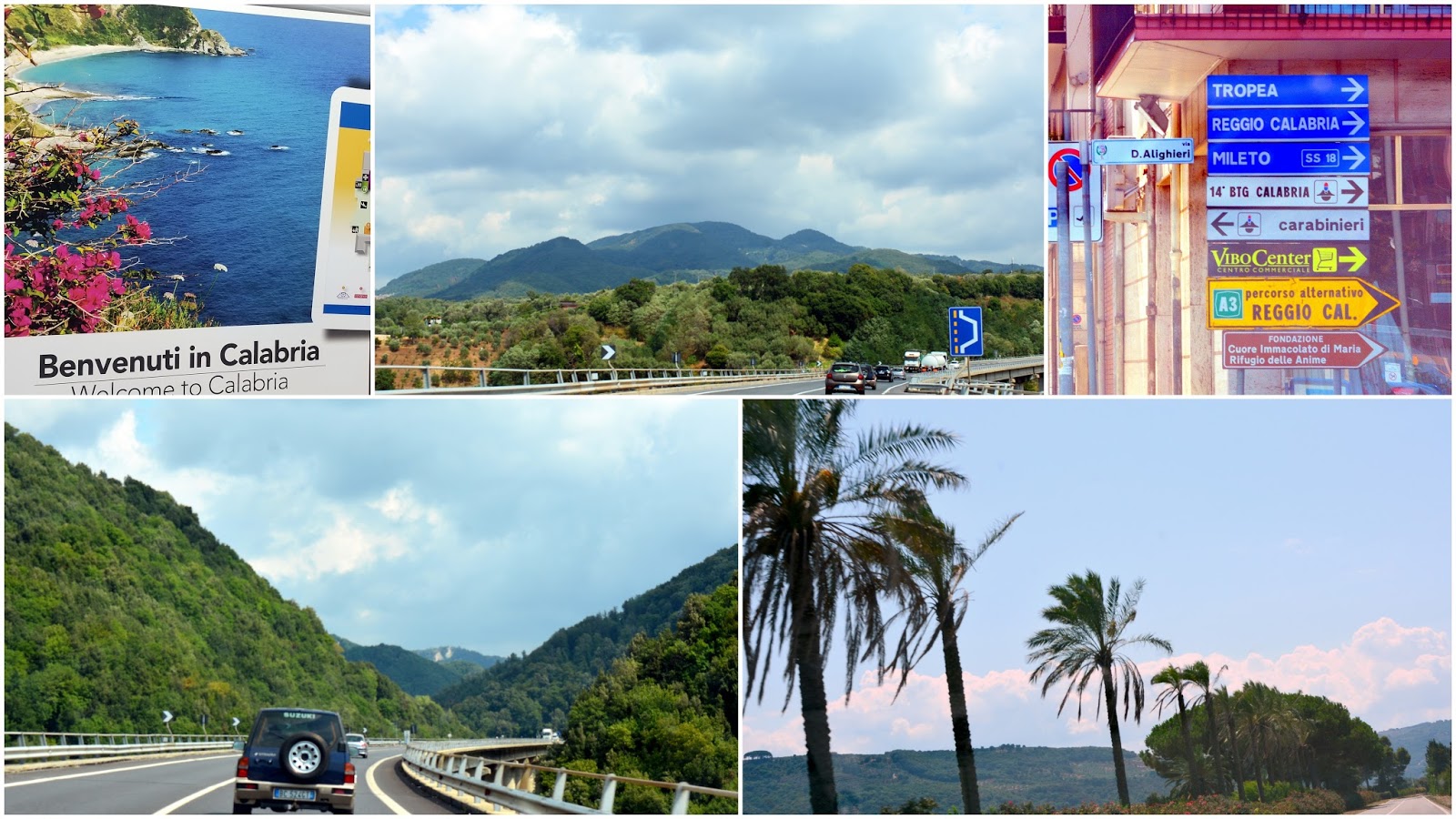
My husband and I flew to Italy last August, on a dream come true trip for us! We would be spending three weeks in both the south and north of Italy, revisiting relatives we last saw in 2001. In that year we spent an entire month in Italy with our two young adult children, traveling again from the south of Calabria to the north, and sightseeing the major cities of Rome, Florence, Cinque Terre, Venice, Genoa, and Turin. On this trip, we were excited to be able to see a very special, week-long, saint's feast day celebration in my husband's hometown and visit with relatives who still lived in the town and also those who were traveling to see the celebration.  We flew from New York to Rome, and then connected to Calabria at Lamezia Airport, where we rented a car and drove to Reggio Calabria.
(All photos and photo collages will increase in size if clicked on)


We stopped in the town of Siderno, where my husband's oldest sister and brother-in-law live, and met in La Vecchia Hostaria--a wonderful local restaurant. My husband's nephew, wife, and daughter were also visiting from Brooklyn, New York, and we dined together, happy to see everyone again. Afterward, we went to my sister-in-law's house for dessert.  She prepared a chocolate dessert called sanguinacchio dolce which is my husband's favorite--photo bottom middle. It is made with pig's blood and sweetened with sugar, chocolate, and spices We also had pastries for those of us who are less adventurous eaters.


We then drove to my husband's hometown of Gioiosa Ionicawhere we had reservations to stay in a bed and breakfast called "La Vecchio Stazione." Our room was very comfortable, had its own bathroom, and was air-conditioned, which is a treat in Italy. Every morning we would cross the street to the "Bar Pasticceria Gatto de Pasquale Gatto," where we would choose cookies or pastry and a cappuccino or cafe latte for breakfast. 


Gioiosa Ionica is also called Gioiosa Ionica Superiore, as there is also an area of the town called Gioiosa Ionica Marina, which is closer to the Ionian Sea. This view is looking up from one of the town's piazzas...


...and this view is looking west from the top of the town, from a terrace of my husband's aunt's home. You can see a medieval castle on the upper right. which dates back to the 12th or 13th century, during either the Swabian or Angevin domination. The Chiesa Matrice, or Mother Church, the oldest and largest church on Gioiosa Ionica, is seen in the upper left of the photo. It was built during the 17th century and has had many additions and renovations.


A closer look at the castle. It was also the home of a feudal lord in the 17th century. This part of Italy was inhabited since ancient times as Greek and Roman ruins have been found nearby,  and it has also been invaded by many over the centuries.


A view over the town's rooftops towards the Ionian sea, which is about five kilometers (3.1 miles) away


Of course one of the first things we did was walk to the home where my husband was born and left as a young boy to immigrate to America with his parents and siblings. The house is located near the town's market, in the middle of the town, and is now owned by another family.  We were able to go inside in 2001, and our children and I were very surprised at how small and humble it was. My husband remembers they did not have plumbing or electricity when he lived there, but it has been modernized since.  Southern Italy was very poor in the 20th century, and although its economic status has greatly improved it still does not have the economic advantages, or tourism, as the rest of Italy.


We enjoyed walking along the narrow streets of the town, marveling at how many of these buildings have been here for many hundreds of years.


I was fascinated to see the dichotomy between ancient and abandoned buildings ...


 ...and modernized and contemporary buildings in Gioiosa Ionica.


Another interesting part of the town was the medieval aqueduct of the Galizzi River, characterized by pointed arches and support the conduit, clearly attributable to its medieval age. It rises at the foot of the cliff, and water is still running down it. High above we could see ancient buildings clinging to the top of the cliffs, and hills full of cacti, that was full of prickly pear fruit, which my husband told me they call "Fichi di India." He remembers eating them as a child and still buys them when he finds them for sale in our area.


Of course, the best part of being in Gioiosa Ionica was visiting with cousins and their families and being with our sister-in-law and brother-in-law and family for a week. We had wonderful times and many delicious meals together!


We visited the early 17th century Church of Saint Rocco, who is the patron saint of Gioiosa Ionica. Inside we saw the statue of the saint that would be paraded through the town and from church to church on his feast day in great celebration and fanfare. The wooden statue was carved in Naples in 1749, and transported to the town by ship. Thousands of people return to Gioiosa Ionica for the event, and we were excited to be here to see it. The Feast of Saint Rocco in Gioiosa Ionica dates back to at least 1583. He became the patron saint of the city in 1743 when a bubonic plague outbreak miraculously ceased when prayers to St. Rocco intervened. 


The streets of the town were all decorated with fanciful lights and the main piazza was bustling every evening for a week leading up to the feast. Many vendors set up booths to sell food and other items and multiple stages held musical and opera entertainment. 

 It was all very exciting and our anticipation grew, as we awaited the Saint Rocco feast day event, which I'll show in my next post.


Bookmark and Share