Showing posts with label National Historic Site. Show all posts

Monday, November 30, 2020

156 Anniversary of the Sand Creek Massacre


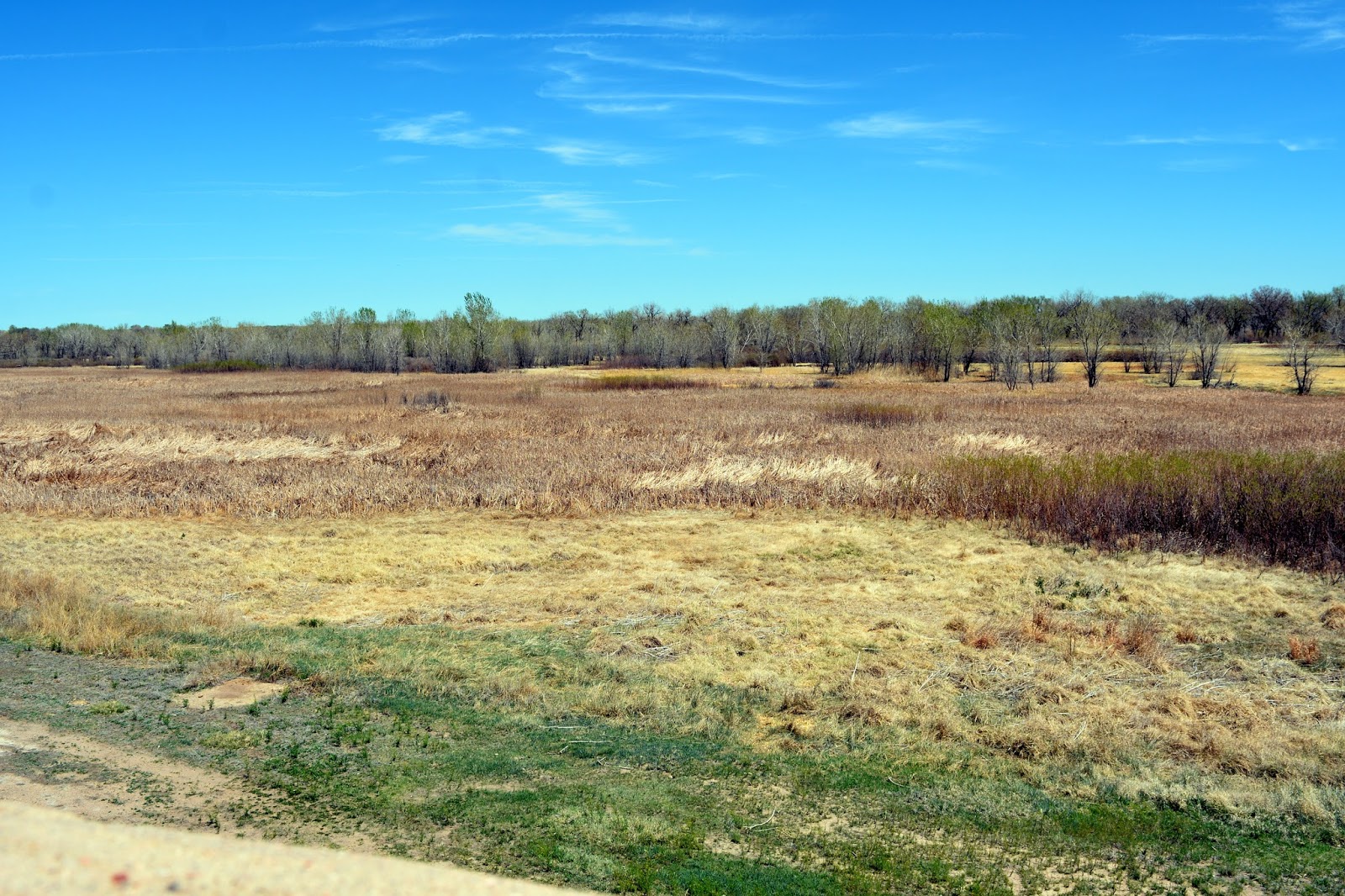
Today was the 156th anniversary of the Sand Creek Massacre.  A few years ago my husband and I visited the Sand Creek Massacre Historic Site located in a remote area of  Kiowa County, near Eads, on the great high plains of Colorado. This site is sacred, controversial, symbolic, and a reminder of a national tragedy that happened on November 29, 1864.  


Please click on to enlarge tread.


Along the Big Sandy Creek, about 700 Cheyenne and Arapaho native people were living peacefully at a winter camp in what was then Colorado territory. They believed they were under the protection of the US Army by treaty. Many of the men were away hunting for food, so the camp consisted of mainly old people, women, and children. At dawn on November 29, 1864, approximately 675 U.S. volunteer soldiers, commanded by Colonel John M. Chivington, attacked the sleeping natives with guns and cannons. Black Kettle, one of the peace Chiefs, raised an American flag and white truce flag above his tipi, as he had been promised protection, but he also had to flee. While many managed to escape, about 200 women and children, and the elderly struggled to run in the sandy earth of the dry creek bed. Some women tried to dig trenches in the creek bed, or in the hollow logs of cottonwood trees to hide their children, but most were mercilessly slaughtered during the eight hours of fighting. During the afternoon, and the next day, the soldiers wandered over the field committing atrocities on the dead, taking native belongings as souvenirs, and burning down the encampment, before departing the scene on December 1, to resume campaigning.

More about the massacre and other photos can be seen on a prior blog post I wrote about the event --click here.   


The tragic story of the Sand Creek Massacre brings us forward to a present-day tragedy that occurred this summer that resulted in strong protests in Denver.  During those protests, the Civil War Union Soldier statue that you see above was torn down from its pedestal in front of the Colorado Capitol Building.  
Upon serious reflection after the protests, a decision was made in a 7-2 vote of the Capitol Building Advisory Committee, to permanently replace this pedestal and statue with a sculpture of a Native American woman mourning the atrocities of the Sand Creek Massacre.  Representatives from the tribes which suffered at Sand Creek 156 years ago spoke to the committee and helped them make this decision

“They were wiped out,” Otto Braided Hair, of the Northern Cheyenne and a descendant of Sand Creek survivors, told the committee. “Their voices are no longer heard. Their wishes and concerns were no longer heard. Those are the people we speak for.”


To see a prototype of the proposed replacement statue click hereIt will be designed by Havey Pratt a Cheyenne and Arapaho tribal member and a descendant of a Sand Creek survivor. He is recognized as an accomplished master Native American Indian artist. He said the idea of using a grieving Native American mother came to him in a dream.  When it is erected in the future I will take photos of it and update this post.


Meanwhile, the Union soldier statue, erected in 1909 to memorialize those who died defending Colorado from an attempted Confederate insurgence, was loaned to History Colorado Center for a one-year period. The museum approached the state with the offer to display the piece with commentary that explains the differences in how various groups have interpreted its meaning, including tribal anger that the same cavalry units memorialized by the statue for heroism in the Civil War also perpetrated the Sand Creek Massacre two years later.  After that, the statue will most likely be placed in Denver's Veterans Park, which seems like a better place for it to be.


I hope all who celebrated Thanksgiving had a wonderful day!  This year was very different for us, as it was only me and my husband at our celebration dinner, but I still prepared a turkey and all the trimmings, including apple pie for dessert. We didn't Zoom with our family, as everyone was on a different schedule, but we talked on the phone and texted.   It was good to give thanks for all our blessings.  I am also thankful for all of you who read my blog and comment--thank you so very much as you bring joy to my days throughout the year!

 Stay happy, safe, and healthy!

You can also find me on

 I'm linking this post to some of the following blog events:

 Mosaic Monday, All SeasonsBlue Monday, Through My Lens MondayLittle Cottage Link PartyHearth, and Soul Link PartyYou Are the Star Blog Hop, Inspire Me MondayHome Matters Linky Party,  Good Random FunNature NotesGrand SocialTravel Photos, Happiness Is HomemadeOver the MoonCreate, Bake, Make Our World TuesdayRuby TuesdayTuesday Turn AboutTuesdays With A TwistLet's Keep In TouchWordless Wednesday on a Tuesday,  Party in Your PJ'sWordless WednesdayNanahood WWOh My Heartsie Girl's Wonderful Wednesday, Your Whims WednesdayWednesday My Corner of the WorldWonderful Wednesday Little Things ThursdayThankful ThursdayThursday Encouraging Hearts and Home,  Thursday Thinking Out Loud, Friendship FridaysFriday Features Linky Party, Skywatch FridayPink SaturdaySunday on Silverado

Bookmark and Share

Sunday, March 31, 2019

Historic Hotel Boulderado


Last week was "Spring Break" for public schools in our area of Colorado, which meant our four grandchildren did not have school. When that happens, grandparents are often "on call." Our son's oldest children--our grandboys--were treated to a special Harry Potter event for a few days at the YMCA of the Rockies by our daughter-in-law. The YMCA of the Rockies is a fun family accommodation and activity center in Estes Park, Colorado, that I've blogged about in the past...click here to read that post and to see the giant elk stag we saw in town on our visit. It is located a short distance from beautiful Rocky Mountain National Park, so it is also a wonderful place to begin a family trip to that park. We only had to babysat one day for our youngest granddaughter, who was too young for the Harry Potter event, as our son was able to take care of her the rest of the time by working from home.
Meanwhile, our daughter was attending a work-related conference in Boulder, Colorado, that was taking place at the historic Hotel Boulderado.  We were babysitting our oldest granddaughter while our daughter was away and also her father was on a trip. Since Boulder is not far a drive from where we live we decided to drive up and also stay a night in Hotel Boulderado, so we could have dinner with our daughter and show our granddaughter where her Mommy was working last week. I always wanted to spend a night in this historic hotel and this was the perfect opportunity!


Hotel Boulderado is located at 13th and Spruce Street, in downtown Boulder, Colorado. In the early 1900s, Boulder was a Western frontier town growing into a small city and the Boulder City Council worked to raise the funds to build Hotel Boulderado, Boulder’s first luxury hotel. It opened its doors on New Year's Day in 1909. The hotel is listed on the National Register for Historic Places as well as Historic Hotels of America. It features 160 rooms and suites, 8,000 square feet of meeting space, and three restaurants and lounges.


As soon as we walked into the beautiful main lobby I knew that this was very deserving of its special historic ratings, and I very excitedly wanted to explore it more!


A close up of the amazing imported Italian stained glass canopy ceiling over the hotel lobby.


Hotel Boulderado was designed by local architects of the time, William Redding and Son.  The five-story brick building incorporates both Italian Renaissance and Spanish Revival features and follows a trend of open court hotels started by the Palace Hotel in San Francisco.  The lobby floor consists of intricate 1908 mosaic tile and the wood trim and staircase is elegantly carved cherrywood.


As we were checking in with luggage we rang the bell to take the original 1906 Otis elevator in the lobby.  Next to the elevator was the elevator's interesting history.


Hotel Boulderado has 160 modernized guestrooms and suites, and my husband and I were fortunate enough to stay in one of the historic 42 that retain a taste of Victorian extravagance with modern amenities. Our granddaughter stayed with our daughter in a more modern but equally elegant room in one of the hotel's wings.


After unpacking, we went out of our room to explore more of the hotel. We did not have to go far as there was a mini-museum right outside a corridor of our room.  There were display cases with Victorian-era artifacts, one of which were ladies' fans...


Please click on to enlarge

...with this fascinating "The Language of the Fan"  description.


There was also a vintage icebox and description, which made me smile, as my parents often called our refrigerator an "ice box" when I was a child and I sometimes slip and call it the same, much to the hysterical delight of my children who then call me "old."


Vintage fire extinguishers were also on display in a beautiful antique hall stand.


More discoveries that we made were an antique organ, Victorian-era furniture, a peek at the top side construction of the lobby stained glass ceiling that was visible through an interior window, and many accent tables holding fresh flowers and plants.


Unencumbered now by luggage, we had fun walking up and down the grand five-floor staircase! 


We found more vintage hotel memorabilia on display in the lobby...


...including this fascinating water fountain that dispensed glacial water from the Continental Divide!  Of course, we all had to take a taste from the fountain. It was very cold and delicious water with a slight mineral after taste.  It seems historic hotels in Colorado all had their own water source, as the historic Brown Palace in Denver, has its own artisan well that is located 750 feet below ground to deliver water to all their rooms. You can see my post how I celebrated my 60th birthday at an overnight stay and formal tea at the Brown Palace on this link.


An antique cash register on display in the lobby.


While our daughter attended a meeting my husband and I took our granddaughter out to walk over a couple blocks to a pedestrian mall on Pearl Street.  As you can see, this part of Boulder retains much of its Victorian charm. 


In fact, this nearby Victorian-era, Queen Anne style, private home was used as the location shot for the 1978 to 1982 TV show "Mork and Mindy" That show lead to actor Robin Williams fame.  (This photo was taken on a different visit to Boulder we made last summer)


We knew our granddaughter would enjoy Pearl Street and she did, especially playing on a boulder playground,  posing with some art sculptures and enjoying an ice cream cone!


An interesting boulder on Pearl Street in Boulder.


Later that evening, we all had a delicious dinner in Hotel Boulderado's Spruce Fish and Farm Restaurant, where we also dined for breakfast the next day.  I am a seafood lover, so I had the special Seafood Paella for dinner, and the Eggs Benedicts with Soft Shell Crab for breakfast. Both were fabulous!


 Our brief stay at Hotel Boulderado was over--our daughter had a busy conference schedule for the rest of the week--and it was time for us to head home.


Our drive back to the Littleton area was filled with gorgeous views of the Flatiron Mountains and other front range foothills.  We enjoyed our visit to the Hotel Boulderado, and I hope you did too!

You can also find me on 


I'm linking this post to the following blog events:

Amaze Me MondayMosaic Monday, All SeasonsBlue Monday,  Through My Lens MondayHeart and Soul Link UpInspiration Monday, Blogging GrandmothersHearth, and Soul Link PartyYou Are the Star Blog HopGood Random FunNature NotesGrand SocialTravel Photos, Photo Tunes, Happiness Is Homemade, Something Old Is NewTuesday TreasuresOur World TuesdayRuby TuesdayTuesdays With A TwistWordless Wednesday on a TuesdaySay Cheese!,  Party in Your PJ'sWordless WednesdayNanahood WWOh My Heartsie Girl's Wonderful Wednesday, Your Whims WednesdayWednesday Around the WorldWonderful Wednesday Little Things Thursday,Thankful ThursdayThursday Encouraging Hearts and HomeThursday Favorite Things,  Pretty Pintastic PartyFriendship FridaysFriday Photo JournalSkywatch Friday, Pink SaturdaySaturday CrittersOver the MoonHappiness Is HomemadeWandering Camera


Bookmark and Share

Sunday, January 15, 2017

Bent's Old Fort National Historic Site on the Santa Fe Trail


One of the most evocative places to visit for history buffs of the Old West is Bent's Old Fort National Historic Site located on the plains of SE Colorado, just outside the town of La Junta. This reconstructed trading post was the last United States outpost for travelers before they would cross the Arkansas River and enter what was then a territory of Mexico, now New Mexico. The fort was originally built in 1833-34 by brothers Charles and William Bent, and Ceran St Vrain, as a trading post for the Native American fur trade.  Finding success the partners soon expanded and built other trading posts to the north and south and stores in Santa Fe and Taos.

Map Source

Bent's Fort soon became an important part of the Santa Fe Trail. The "Father of the Santa Fe Trail" was Captain William Becknell. In 1821 the land beyond Missouri was a vast uncharted region known only for its vast bison herds and Native American inhabitants. When Mexico won its independence from Spain in 1821, trade between Santa Fe and the United States became a possibility, and Captain Becknell was determined to cross the hostile territory to do trade, blazing a path that would become known as the Santa Fe Trail. Soon, many wagon trains were using the trail to head to the southwest. Two passages soon developed, one called the Cimarron Cutoff and the other the Mountain Branch over Raton Pass--see map above. Bent's Fort became an important stop for those on the Mountain Branch of the trail.


Travelers, traders, trappers, the US Army, and the Cheyenne and Arapaho tribes came together at Bent's Fort to rest, eat, trade and buy supplies and repair their wagons.  The largest trade with the Native Americans was for bison hides in exchange for the white man's goods. The famous Western Scout, Kit Carson, was a hunter for the fort from 1831 to 1842.  The explorer John C. Fremont used the fort as both a staging area and replenishment junction for his expeditions. During the Mexican-American War, in 1846, the fort became a staging area for Colonel Stephen Watts Kearny's "Army of the West." Kearny went on to seize New Mexico for the United States, and seventeen hundred army men and volunteers used the fort as the rendezvous point for the invasion.


Bent's Fort is described as having been a structure 180 feet long and 135 feet wide, built of adobe bricks. The walls were 15 feet in height and four feet thick. It was the strongest post at that time west of Fort Leavenworth in Kansas.


Some of the other principals in the history of Bent's Fort as displayed in a placard in the History Colorado Center exhibit. Please click on to enlarge this photo, and any other photo in this post, to enlarge them to see details.

Click on to enlarge

As one approaches Bent's Fort there is a gravestone of a stagecoach driver, Edward Dorris, who died in 1865 and is buried along with approximately 12 others in graves in a burial ground outside the fort. The Santa Fe Trail was always a perilous route and many perished along the route. On a prior blog post, about New Mexico, I showed one of the last grand landmark stops along the Santa Fe Trail, called Wagon Mound, where many settlers were attacked by Native Americans who were angry that their hunting grounds were being invaded and destroyed. Click here to read that post. That post also shows Raton Pass, which was the mountain pass the Santa Fe Trail traveled over.


Bent's Fort entrance is open to a large plaza surrounded on all sides by two level walls with staircases leading up to them ....


...and shaded walkways  along all the corridors leading into the varied rooms.


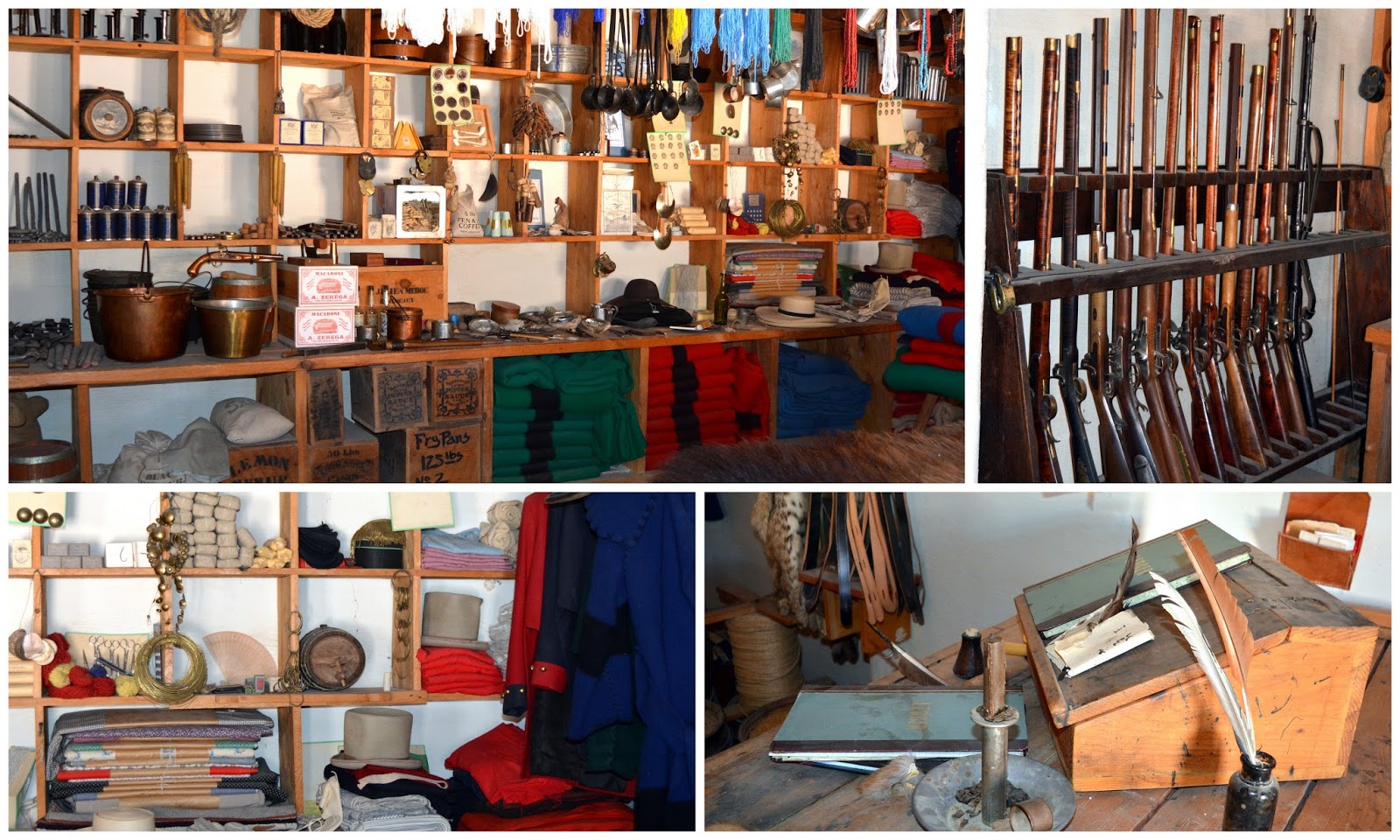
Primarily a trading post, Bent's Fort sold and traded goods in their general store. It was stocked with items such as calico fabric, blankets, cooking utensils, tobacco, muskets, gun powder, knives, buckets, medicines, beads, clay pipes, coffee, chocolate, corn, animal feed, writing material, and so on.


The fort was also operated by people of many nationalities and vocations, including blacksmiths, trappers, carpenters, wheelwrights, gunsmiths, cooks, cattle herders, clerks, etc.,  who would offer their services for a fee to visitors to the fort, 


The kitchen was staffed with cooks, including a slave of Charles Bent, Charlotte Green, who was famous for her pumpkin pies and flapjacks.


The ground level rooms also consisted of meeting rooms, and offices


As the resident Manager, William Bent oversaw all trade at the fort. He occupied private quarters in the fort, but also lived with his Cheyenne wife and family in their village as well. 


Bent's Old Fort often has days that feature costumed living history interpreters that provide guided tours and demonstrations, but my husband and I visited between tours and did a self guided tour instead, with literature provided by the staff. You can check the park web site for a calendar of events and tours held at the park on this link.


View of the fort entrance from the second floor...


...and from the other side of the ramparts.


It was interesting to see more of the re-construction of the fort that the National Park Services completed in 1976, as part of the United States Bicentennial Celebration, as well as the state of Colorado's Centennial Celebration. 


Most of the rooms upstairs were used for boarding, and were re-furnished in period style. 


There was even a billiard room upstairs. Billiards, card games, and chess and checkers were played to ease the long nights and days and help the fort's employees deal with boredom and home sickness.


A view of the Colorado plains from the roof top of the fort.


Often referred to as the "Castle on the Plains," Bent's Fort also had cannons for reinforcement.  The fort was never attacked, however, and the Bents worked hard to broker peaceful relations with all that they came in contact with.

More informational placards from the History Colorado Center. Click on to enlarge

After the war with Mexico, Charles Bent became the Governor of New Mexico, but on January 19, 1847, revolting Mexican and Pueblo Indians murdered him and other Americans in Taos.
The US government never paid the Bents compensation for using the fort for housing and supplying Kearny's troops during the Mexican American War. When there was a cholera epidemic and increasing unrest among southern Native American tribes who raided the Santa Fe Trail wagon trains, business declined at Bent's Fort and it fell on hard times. William Bent offered to sell the fort to the US Army in 1849, but they declined the offer. So a frustrated Bent moved his operations out and set fire to the fort, and abandoned it.
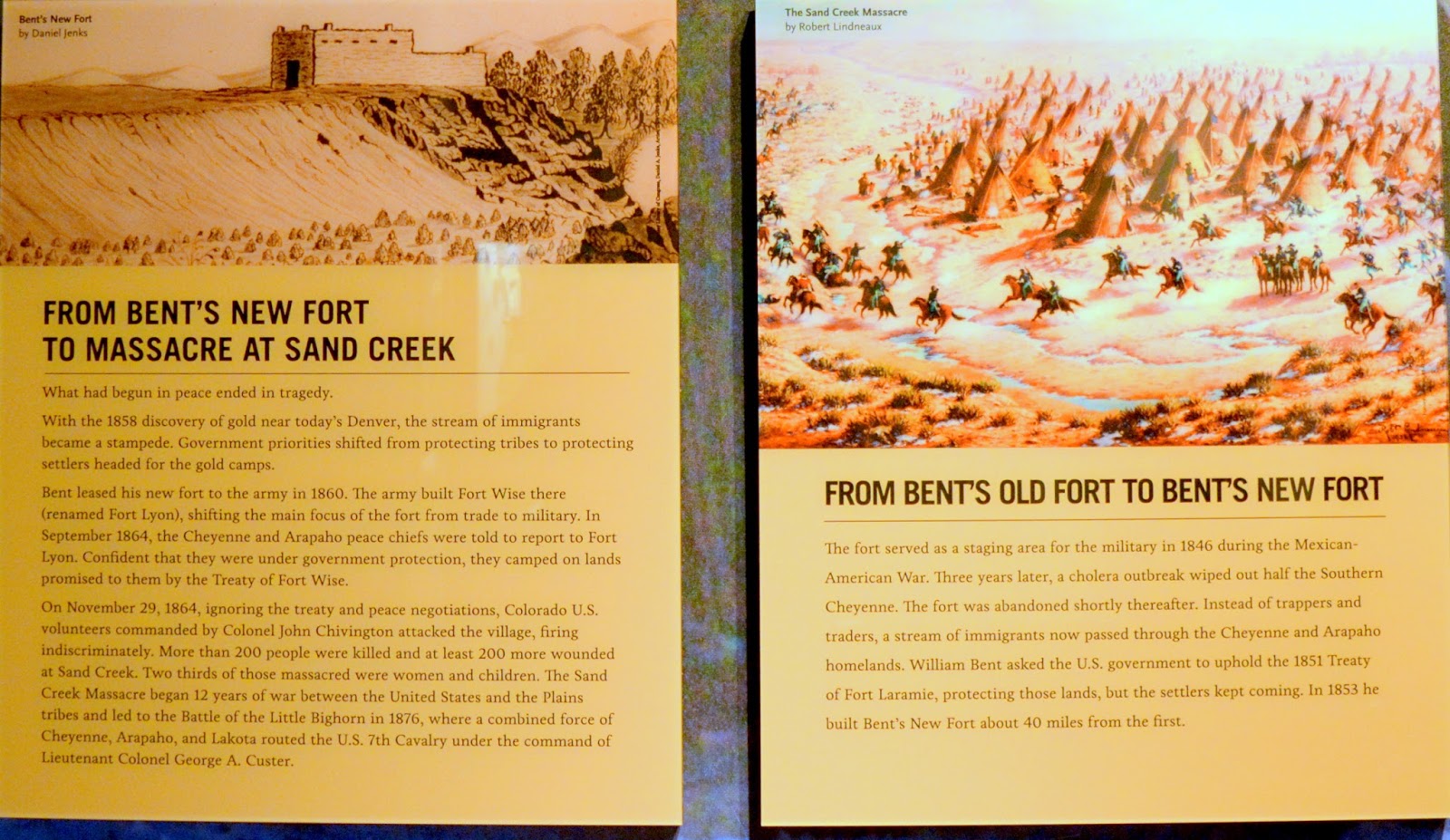
William Bent then built a new fort at the Arkansas River in 1853, known then as Big Timbers, but the glory days of trade were over, and it was not successful.  Bent leased this fort to the Army in 1860, which then constructed Fort Wise--later renamed Lyons-- nearby.  Ob November 29, 1864, Colonel John Chivington marched towards the Cheyenne Sand Creek Reservation, to destroy the native American's camped there, lead by the peace chief Black Kettle. Chivington posted a guard on William bent to prevent him from warning the Cheyenne leader and his people. You can read the story of the Sand Creek Massacre that occurred nearby in the placards above,  or on my blog post --here--about that event. William Bent died heartbroken in  Westport, Kansas in 1869.


Although most of Bent's Fort had been abandoned it was still used over time as stagecoach station and later as cattle corrals. In the 1950's the Colorado State Historical Society acquired the Bent's Old Fort and arranged for archaeological investigation to determine the fort's outlines. It was declared a National Historic Landmark in 1960.


Exhibit at the History Colorado Center of artifacts found at Bent's Old Fort.

More archaeological excavations occurred after it became part of the National Park Service system and the park was reconstructed in 1976 with the help from these artifacts, diaries sketches and paintings.  

Bent's Old Fort National Historic Site preserves for the future the remarkable history of the fort as a place of early trade, it's role on the historic Santa Fe Trail, as well as its role in Western Expansion. It is a fascinating place to visit to learn about the Traders, Tribes and Travelers of the old west!


I'm linking this post to the following blog events:

Thank you to all the blog hosts!


Bookmark and Share