Showing posts with label East Village. Show all posts

Friday, July 16, 2010

The New York Marble Cemetery


An interesting place I visited in Spring, but did not had time to blog about until today, is The New York Marble Cemetery, located at 41 and 1/2, Second Avenue, in the borough of Manhattan.  It is a small burial ground in Manhattan's East Village, and it is the oldest public non-sectarian cemetery in New York City.

(All photos can be enlarged for easier viewing by clicking on them once, and then again when they open on a new page. Use your browser's back arrow to return to the post.)


An informational plaque located on the front gates.  

The cemetery is usually open to visitors on fourth Sundays, April through October, from 11 until 3, as well as several other weekends throughout the year - check the schedule on this link.


Most of the cemetery is shielded from the avenue by the buildings that have sprung up around it over the years. Enter from 2nd Avenue between 2nd and 3rd Streets through a circa 1908 wrought iron gate. It leads to a walkway that is one hundred feet long leading to a circa 1854 gate with cast iron decoration .


Once inside you can see a large open garden space covered by grass.  An exhibition about the history of the cemetery was going on at the time of my visit. The cemetery was incorporated in 1831 in response to fears about yellow fever outbreaks at the time, when legislation had outlawed earth graves.  Marble vaults the size of small rooms were built ten feet underground in the excavated interior of the half acre of land that comprises the cemetery.


According to the cemetery's web site: "Half of the older caskets were tiny, holding children aged six and under. Contagious diseases such as scarlet fever, measles and whooping cough, as well as infections for which there were not yet antibiotics (erysipelas, pneumonia, cholera, etc.) contributed to a level of early mortality fortunately forgotten in most parts of the world. What would be termed symptoms today were then considered primary causes of death: dropsy (edema), congestion or inflammation of the lungs or brain, and dysentery or diarrhœa. For adults, the leading cause of death by far was tuberculosis, then known as consumption or phthisis pulmonalis. A surprising number of people who reached maturity, however, lived into their eighties and nineties, and invariably died of 'old age.' "


The walls of the cemetery are made from Tuckahoe marble, which was also used for the vaults, plaques and lintels, and gave the cemetery its name. Unfortunately, the marble is relatively soft material and many of the walls are rapidly disintegrating from time and acid rain.  Funds are being raised by the cemetery's board of trustees for the constant upkeep and renovations needed to preserve the cemetery.


All of the vaults are underground and the only name and vault makers are tablets like these on the walls.


Please enlarge this photo of a diagram that shows what the procedure for burial in the underground vaults would entail.


Above and below are part of the display in the cemetery the day I visited that shows portraits of the many of first people buried in the New York Marble Cemetery. 


One of the illustrious people buried in the cemetery is Doctor David Hosack, 1769-1835.  He was one of New York's most famous citizens of the time. Hosack was a founder of several New York institutions that survive to this day, including Bellevue Hospital and The New York Historical Society, and was a friend and confidante of some of the more distinguished citizens of the early Republic, including General Alexander Hamilton.  As the attending physician at the General’s duel with Aaron Burr in 1804, he cared for Hamilton in his last hours on earth. When Hosack bought a vault at the marble cemetery a few years before his death, other early New Yorkers flocked to do the same and, before too long, the cemetery had became the place to be buried in Manhattan.

By 1838, rural cemeteries, such as Green-Wood Cemetery in Brooklyn, quickly became the preference of most New York families, and soon the use of the Marble Cemetery declined. Most of the 2,070 interments took place between 1830 and 1870.  Now the cemetery’s quiet, half-acre grounds are available for rent for appropriate private or corporate events.

I found it a fascinating place to visit and another unexpected quiet green space amongst the bustling city streets. It was interesting to reflect upon the men and women buried there who were so influential in early New York history. Although I've lived in New York City my entire life I am constantly amazed by new discoveries that I make sometimes just by walking down a different street.  There is always something new to learn in this great city!


Bookmark and Share

Tuesday, June 22, 2010

Saint Mark's Church In The Bowery, East Village NYC


I read this fascinating historical book recently about an almost forgotten period in American history, called "The Island at the Center of the World." It is about the Dutch colony of New Netherlands that was located on the east coast of North America in the seventeenth century for over fifty years, until the English gained control of it in 1664, and turned its capital, New Amsterdam, into New York City.  Journalist and historian Russell Shorto was inspired to write this book when he learned about the New Netherlands Project which is based at the New York State Library in Albany, New York. For the last 30 years historian and linguistic scholar, Charles Gehring, has been translating 400 year old documents from New Amsterdam that were stored in the library for the project, and Shorto then interpreted them into a enthralling tale of the beginnings of the greatest city in the world.

Inspired by this book, I went out to find a little bit of the Dutch history that I read about, and I took a trip into the East Village/Lower East side neighborhood of Manhattan to visit Saint Mark's Church in-the-Bowery, located at 131 East 10th Street, at the intersection of 10th and Stuyvesant Streets and 2nd Avenue.   It is located on the oldest site of continuous worship in New York City and it is the second oldest church in Manhattan.

The church history from it web site states: "The St. Mark’s Church and its yards are just a few reminders of the once vast “bouwerie,” or Dutch plantation, which Peter Stuyvesant, governor of New Amsterdam purchased in 1651 from the Dutch West India Company. When Stuyvesant died in 1672, his body was interred in a vault under the family chapel he’d had built in 1660. In 1793, Stuyvesant’s great-grandson, Petrus Stuyvesant, donated the chapel property to the Episcopal Church with the stipulation that a new chapel be erected and on April 25, 1795, the cornerstone of St. Mark’s Church in-the-Bowery was laid."


The site is officially listed on the National Register of Historic Places and was designated a New York City Landmark in 1966.


An information plaque on the exterior of the church giving a brief account of its history.
(All photos may be enlarged for easier viewing -- click on once and then again to enlarge full size.  Use your computer browser's back arrow to return to the post after viewing enlarged photo)


The bust of Peter Stuyvesant is located in the churchyard. He served as the last Dutch Director-General of the colony of New Netherland (New York) from 1647 until it was ceded provisionally to the English in 1664. The bust was designed by Dutch sculptor Toon Dupuis, and presented to St.Mark’s by Queen Wilhelmina of Holland and the Dutch Government on December 5, 1915.

After losing the New Amsterdam colony to the English, Stuyvesant was recalled to Holland. He later petitioned to return to his beloved renamed New York, and died here in 1672. He is entombed in a wall in the St. Mark’s Church east yard, and and six generations of his descendants are also found in the churchyard. The black marker in the photo above shows the location of his tomb.

"Here (Peter Stuyvesant) built a manor and chapel. Here he would live out his life and be buried, and here, over the parade of centuries, flappers, shtetl refugees, hippies and punks – an aggregate of local residents running from Trotsky to Auden to Charlie Parker to Joey Ramone – would shuffle past his tomb.

-- Russell Shorto, from his book "The Island at the Center of the World."


There are other historical notables buried in the churchyard, one being Daniel Tompkins, a former governor of New York (1807-1817) and Vice President of the United States (1817-1825).

Some contemporary Memorial plaques on the church facade in the east churchyard.

The church web site states: "Support for the arts is an integral part of St. Mark’s community-based mission. Poetry, theatre and dance have co-existed at St. Mark’s providing a neighborhood and national forum for original and provocative performances. W.H. Auden, William Carlos Williams, Edna St. Vincent Millay, Kahil Gibran, W.H. Auden and Allen Ginsberg have taken part in poetry readings. Isadora Duncan and Martha Graham danced at St. Mark’s, and Sam Shepard produced his first plays here. Today three innovative projects are housed at St. Mark’s: The Poetry Project, Danspace Project and Ontological-Hysteric Theater."


The Saint Mark's in-the-Bowery west churchyard is a lush green space in summer, shaded by a canopy of many trees. It is a little "secret garden" of sort, a quiet oasis where you can sit and rest and retreat from the crowded city. I think it's a fitting that it is known as "The Healing Garden."


A sign in the churchyard.

Another view of the west churchyard.  The white building in the rear is the historic Ernest Flagg Rectory of Saint Mark's. There were quite a few people enjoying a Sunday afternoon in the yard.


One of my favorite photos of the day: a beautiful red rose resting above the rusted iron fence of the churchyard.  In a place with so much history it was a small reminder to me to enjoy each precious moment, as life, and the world, are ever changing.


I'm adding this post to the weekly "Outdoor Wednesday"event on Susan's blog A Southern Daydreamer. Please visit Susan's blog today to see links to all the blogs participating with their wonderful outdoor posts.


Bookmark and Share

Tuesday, June 15, 2010

East Village and Veniero Pastry Shop and Cafe

(All photos can be enlarged by clicking on them once, and then again.  Return to the blog post by using your browser's back arrow)

The East Village is one of downtown Manhattan's most vibrant neighborhoods.  It  extends from 14th Street south to Houston Street, and east of Fifth Avenue. The neighborhood is a lively mix of students, artists, and young professionals. There is a large and varied assortment of antique shops, bookstores, record stores, specialty shops, and ethnic restaurants. The East Village is a mix of old mansions and tenements and recent new condo constructions. Many people are attracted to the neigborhood because of its relatively affordable rents compared to other downtown areas.  I find it a fascinating neighborhood to visit and explore.


This beautiful Federal Style house, located at 21 Stuyvesant Street, was built in 1803 on land owned by the Stuyvesant family since the 17th century. It was built by Petrus Stuyvesant, the great-grandson of Peter Stuyvesant, who was the last director general of the city then known as New Amsterdam, until it was ceded provisionally to the English in 1664 and renamed New York. It was a wedding gift to Stuyvesant's daughter Elizabeth, and her husband, Nicholas Fish, a Revolutionary War hero and veteran of Valley Forge. Fish was also a close friend and political ally of Alexander Hamilton. Their son, Hamilton Fish, was born here in 1808 and called it home until 1838. He would go on to became a United States Representative (1843-45), New York State Governor (1848-49), United States Senator (1851-57) and United States Secretary of State (under President Grant from 1869-1977),

An informational plaque on the Landmarked house. 


When I am in the East Village I can't resisit visiting the Veniero Pastry Shop and Cafe, located at 342 E.11th St. NY,NY. This Italian pastry shop has been continuously owned and operated by the Veniero Family since 1894

Veniero's has stamped copper ceilings, Italian marble floors, and stained glass windows, and has an atmosphere just like an old world style Italian cafe.

Upon entering the pastry shop, you are greeted by a wonderful 40 foot display of traditional and regional Italian confections, a vast variety of large and miniature pastries, and assortments of hand-made Italian butter cookies.
My husband and I decided to sit in the cafe section to enjoy a cappuccino and a pastry.

Instead of a menu they they use picture cards, so that you will see what you order.

So many wonderful selections!  It was not easy to choose.

My husband had a plain Baba Rum, one of his favorites....


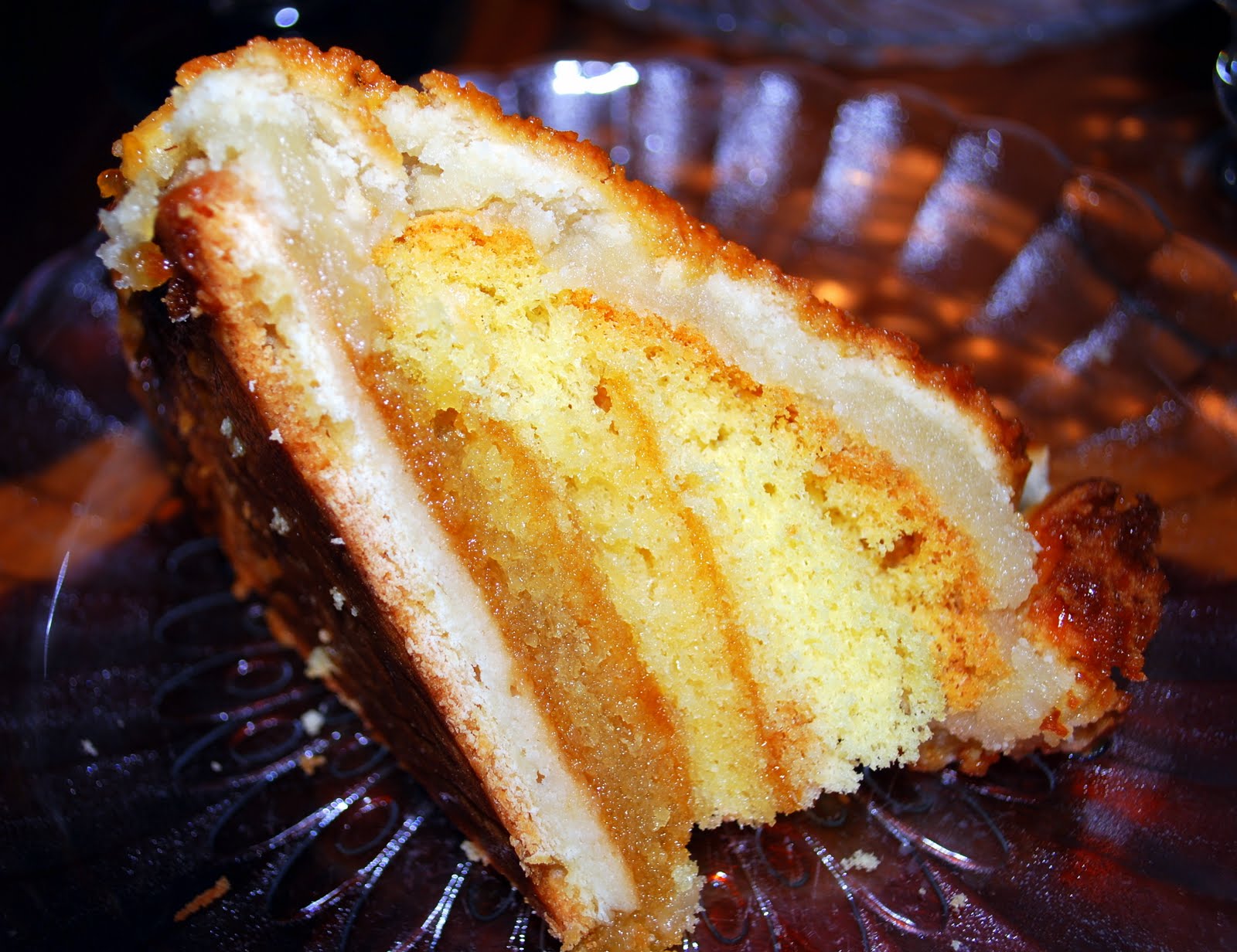
..and I chose a Torta di Mandorle as I love almond flavor, and this cake was almond lover's delight!


Along with our cappuccinos, the desserts were perfect way to re-energize for a little more of our exploration of the East Village neighborhood, which, of course, I will blog about at a future date.

I'm linking this post up with Susan's Outdoor Wednesday event at her blog, A Southern Daydreamer, and Jenny's Alphabe Thursday event on her blog Jenny Matlock.  The letter this week is "V."  Please visit both blogs and join in all the fun!


Bookmark and Share

Tuesday, June 8, 2010

Ukrainian Heritage in New York City


New York City is home to one of the largest Ukrainian ethnic communities in North America. Ukrainians have lived in the robust and ever-changing area known as "Little Ukraine" in the East Village neighborhood of New York City since the 1870s. Nearly 1/3 of New York City's 80,000 Ukrainians reside in the area bound by Houston and 14th Streets, and Third Avenue and Avenue A. 

I am part Ukrainian through my maternal grandparents who emigrated to this country from Ukraine in the early 1900s.  Although my grandparents had settled in Pennsylvania,  I'm always fascinated to visit this area in the East Village to learn more about my cultural heritage.


Saint George Ukrainian Catholic Church located at 30 East 7th Street, New York, NY moved to its present location in 1911 from its original location on East 20th Street and First Avenue.  It is recognized as a nucleus of all Ukrainian churches in the New York area. In 1978, St. George's parish built the new church structure that you see in the photo above, in a classical Ukrainian Byzantine style of architecture.


In 1940 the parish established an elementary school, and subsequently a high school, which was accredited by the State of New York. It offers the Ukrainian language as part of the curriculum.


Information from St. George's website: "The portico of the church has a mosaic of Christ circumscribed with the words: 'Come to me all of you who labor and carry heavy burdens and I will give you rest.' The mural includes Ukrainians in native costume. In the background is an image of St. George Cathedral in Lviv, Ukraine, and the historical Kievan St. Sophia Cathedral (Kyiv, Ukraine). Directly above the doorway of the inner entrance is a mosaic of the church's patron saint George slaying the dragon symbolizing the constant struggle between good and evil."


Across the street was Surma "The Ukrainian Shop" ( now closed)

Their motto was "Come into Surma and spend some time in the old country."  

Shall we go in?


Inside the cozy store, there is a wonderful inventory of handcrafted Ukrainian goods. Here we see hand-woven kilims, embroidered folk blouses and tunics, and brocaded ribbons and trims. 


This display case held colorful hand-painted Matryoshka nesting dolls of all sizes.


This showcase contained a large assortment of handmade, and commercially made, Pysanky, which are traditional Ukrainian Easter Eggs.


Surma also sells the wax, dyes, and other supplies needed to craft your own Pransky.


They have a large selection of Ukrainian porcelains and ceramics......


......and hand-painted icons and authentic Ukrainian wood crafts.


Surma also sells English and Ukrainian language books about Ukrainian history, culture, holidays and traditions, and dictionaries.  Plus they have selections of popular and classical music from the Ukraine and greeting cards. Visiting Surma was certainly like taking a trip back to see the folk crafts of Ukraine, and the friendly staff was very pleasant and helpful. 


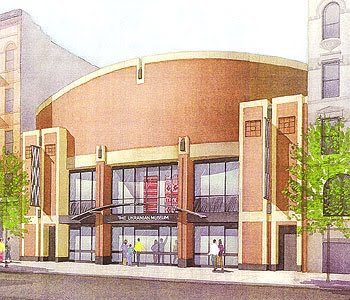
On my next visit to the area, I hope to visit  The Ukrainian Museum located at 222 East 6th Street, between 2nd and 3rd Aves., so that I can show some of its exhibits on my blog. The museum opened a new building in 2005, and its holdings of Ukrainian folk art and fine art collections include one of the most important documented collections outside of Ukraine! 

 EDITED IN JULY 2023 --The Ukrainian store sadly closed after 98 years!  As this article stated: "The reality is that the East Village neighborhood – known affectionately as “Little Ukraine” – has seen an increase in the closing of Ukrainian-owned shops, from the Kyiv Restaurant (founded in the 1970s and closed in 2000) to Kurowycky’s Meat Market in 2007 (after 52 years in business). Surma is simply the latest casualty in the changing landscape of New York’s neighborhoods."


Bookmark and Share